

USFWS On ‘Gravel To Gravel’ Initiative To Conserve Yukon River Salmon Habitat
The following is courtesy of the US Fish and Wildlife Service Alaska Region:
U.S. Fish and Wildlife Service engagement in the Gravel to Gravel Initiative in Yukon, Alaska
May 15, 2026
By Chandra McGee
Since time immemorial, the Yukon River in Alaska has sustained people, fish, birds, and other wildlife, supporting strong and resilient communities and ways of life. Traditional foods—including salmon, caribou, moose, and migratory birds—have been vital to food security and Indigenous cultures for the more than 50 tribes who have stewarded the region’s lands and set up fish camps in its watersheds for thousands of years.
A Salmon Crisis in the Yukon
Today, Yukon River communities are facing extreme challenges. The Yukon River is home to five species of Pacific salmon and the importance of salmon, especially Chinook (king), cannot be overstated. However, Chinook have been in low abundance across the Yukon watershed for a long time, with declines observed since the mid-1990s. Chinook salmon populations declined so abruptly in the last five years that the State of Alaska and Department of Fisheries and Oceans Canada took the unprecedented step of closing all fishing for Yukon River Chinook in both Alaska and Canada until 2031 under a seven-year moratorium.
Under the U.S. Department of Interior’s Gravel to Gravel Initiative, partners are working to address the crisis and rebuild salmon runs. A variety of projects aim to conserve Pacific salmon habitats, collaborate with tribes, and address ecosystem threats to food security. The vision is: “With tribes centered, we unite to care for salmon, from gravel to gravel.”

Ryan Hagerty/USFWS
Partnering with Yukon River Communities
U.S. Fish and Wildlife Service (Service) Partners for Fish and Wildlife (PFW) Program biologist Chandra McGee, from the Northern Alaska Field Office, is partnering with the Indigenous-led Yukon River Drainage Fisheries Association (YRDFA) to catalyze meaningful action. The Yukon Watershed Ecosystem Action Plan project combines habitat alteration and fish passage assessments with Traditional Ecological Knowledge to holistically inform future local watershed planning efforts. The project is guided by a 12-person steering committee with representatives from communities along the Yukon River.
Over the past four years, Chandra and other Service biologists have supported YRDFA staff by providing capacity-building trainings and conducting stream surveys across the expansive 330,000-square-mile Yukon River watershed. Data was collected at sites from the lower river village of Emmonak in western Alaska, to the community of Eagle, over 1,000 river miles upstream near the Canadian border.
YRDFA staff are using a Service-developed ArcGIS Survey123™ application, the Fish Barrier Hunter, to streamline data collection on culvert condition at road/stream crossings. In addition to crossing information, they are collecting in-situ water quality measurements, invasive species , and fish presence information. As of fall 2025, more than 150 sites in the Yukon have been surveyed, creating the first comprehensive dataset for fish passage in rural communities in northern Alaska.

Timothy Ericson/USFWS

Devan Fitzpatrick/USFW
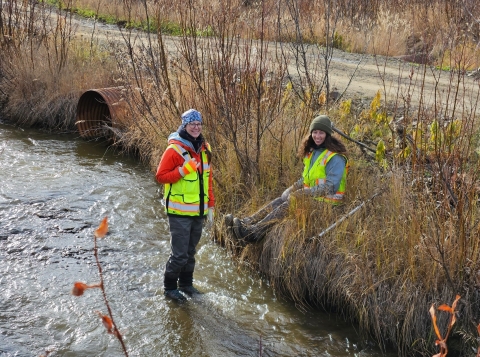
Devan Fitzpatrick/USFWS

Erin McCarthy/USFWS
A Cycle that Connects Generations
Just as the life cycles of Pacific salmon are interconnected with past and future generations, so too is the Gravel to Gravel Initiative one important part of the ongoing story of recovering Yukon River salmon. Set in motion at birth, the fate of Pacific salmon is like clockwork: each year a new generation returns from sea to spawn where their ancestors’ lives began. Females grind their tails into the gravel, hoping their nests, and the eggs within, will withstand the scour of ice and spring floods. The gravel is home, where life begins and ends. It moves toward the sea like the baby salmon do, but the river’s constant movement across the floodplain over the ages will bring more gravel, and the salmon return.

Alaska Salmon 2011: Not Too Shabby

Prime Time For Face Time At Sportsmen’s Shows

EPA: Potential ‘Adverse Impacts’ On Bristol Bay Salmon Fishery With Pebble Mine; Comment Period On Draft Study Open Into July
About Author
