

Too Many Pinks? NPS-led Study Finds More Humpies Entering Sitka National Historical Park Waters
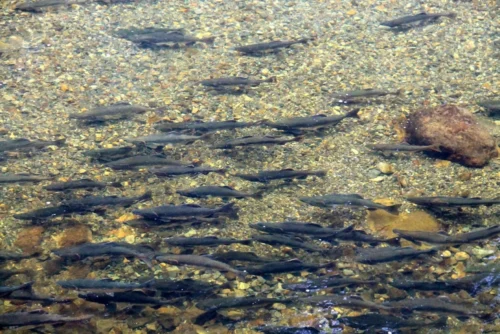
Afascinating National Park Service study found pink salmon have found a new spawning home in a Sitka National Historical Park Creek. Here are some details via National Parks Traveler:
At the Indian River in Sitka National Historical Park in Alaska, researchers have found that in recent decades, annual abundances of native pink salmon have increased dramatically. Scientists are racing to discover whether the numbers are a warning sign for the river or a return to a natural range.
A 2026 study notes that since 1980, pink salmon abundance has increased from several thousand to regularly exceeding 100,000 fish annually. Moreover, there are indications that the duration of pink salmon spawning, formerly limited to August and September, now regularly spans July through October.
The study says that large salmon runs can put other aquatic species at risk by depleting in-stream dissolved oxygen concentrations. The risk is especially high when the runs coincide with periods of low river flows or warm temperatures. For example, a large pink salmon run in 2013 led to a 37-day period in which dissolved oxygen concentrations in the Indian River were well below the threshold required for healthy physiological function in most freshwater species.
The researchers note that while hatchery salmon may be contributing to the abundance of pink salmon observed in recent decades, it is also possible that the relatively low numbers of spawning pink salmon observed before 1980 may have been historically atypical, and current densities are within the natural range.
From the NPS study published earlier this month:
Hyperabundance of native species within their natural range can pose a difficult management challenge. This study examines the case of pink salmon in Sitka National Historical Park’s Indian River. Though native to the river, numbers of pink salmon returning to spawn in late summer have grown exponentially in recent decades, putting other fish species that are reliant on the river at risk. This article explores the drivers and context of this hyperabundance.
In Alaska, pink salmon aren’t exactly coveted by anglers who want better sport fishing opportunities from kings or coho, nor do they provide the kind of delicious sockeye fillets for table fare. In a 2018 report, biologist Dr. Greg Ruggerone told us some of his and other research tidbits about growing amounts of pink salmon can affect other fish and even seabirds in the saltwater:
Ruggerone thinks that the exceptionally high abundance of pink salmon and the large quantity of prey consumed by them, as reflected in their high growth rate, makes pink salmon the dominant salmon competitor in the North Pacific.
“One way to look at that is they are growing so fast. They enter the ocean with little or no rearing in freshwater as a tiny fry,” he says. “They spend one winter and then come back the next August or so at a pretty big size. So in other words, their growth rate is probably faster than the growth rate at sea of other species of salmon.”
While pinks outnumber their Chinook and sockeye counterparts in the North Pacific, they are not only not as big but are less desirable for sport anglers and foodies who have made wild salmon such a coveted delicacy.
So in some ways, pinks might be considered villains among their more celebrated salmonid cousins.
So welcome back to the maligned world of the pink salmon in Alaska.

Alaska Salmon 2011: Not Too Shabby

Prime Time For Face Time At Sportsmen’s Shows

EPA: Potential ‘Adverse Impacts’ On Bristol Bay Salmon Fishery With Pebble Mine; Comment Period On Draft Study Open Into July
About Author
