

State On The Marine Mammal Protection Act And How An Update Can Impact Alaska
The following is courtesy of the Alaska Department of Fish and Game:
Updating the Marine Mammal Protection Act Key Points
September 23, 2025
Background: The Marine Mammal Protection Act (MMPA), enacted in 1972, was designed to address human-caused decline in marine mammal populations. The MMPA provides blanket protections for all marine mammals by prohibiting ‘take’ regardless of population abundance. Over the past 50 years, the Act has been largely successful in restoring many populations to healthy, sustainable levels.
Marine mammals are a vital part of Alaska. The subsistence harvest of marine mammals is a central part of culture and food security in Alaska coastal communities. Regular sightings of whales, porpoises, seals, sea lions, walrus, sea otters, and polar bears shape Alaska culture, bring joy to many people, and support a growing tourism industry.
Issue: The blanket protections of the MMPA function well when populations are low. However, due to the Act’s success, some marine mammals have proliferated to extremely high abundances and are affecting fisheries, marine transportation, and development activities. When populations recover, the MMPA’s conservative framework creates a situation where marine mammals are managed to their optimal levels at the expense of ecosystem balance and human uses. With many stocks recovered, the focus should shift from recovery to long-term conservation – managing marine mammals as part of the broader ecosystem, while retaining precautionary measures where needed.
Impacts of an outdated MMPA in Alaska
- Limitations on subsistence harvest. Subsistence uses and harvests of marine mammals are inappropriately constrained. To qualify for marine mammal subsistence hunting, the Services limit participation to individuals who reside on the coast and have at least 1?4 Alaska Native blood quantum. Hunters who no longer live on the coast and children of hunters who do not meet the blood quantum requirement cannot hunt marine mammals.
- Ecosystem imbalance affects fish stocks of conservation concern. When fish stocks are depressed, predation by marine mammals can slow or halt their recovery and prolong the need for strict fishery conservation measures such as closures. Seals and sea lions are present in the mouth of every major river from Cook Inlet to California, concentrating pressure on vulnerable anadromous fish populations.
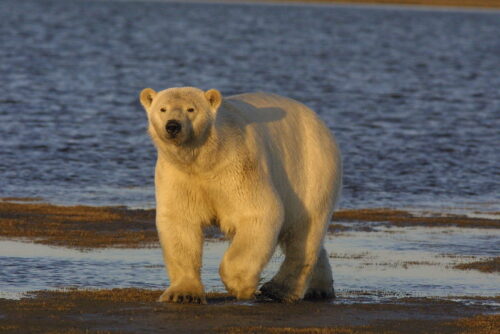
- Polar bears on the North Slope. Well-managed oil and gas activities are not a threat to polar bear populations. However, the U.S. Fish and Wildlife Service (USFWS) has been using biased analyses under the MMPA to inappropriately constrain oil and gas activities. Unless this is addressed, additional development on the North Slope will be forestalled, robbing the state and local municipalities of additional revenues for funding critical services.
- Sea otters in Southeast Alaska. The State of Alaska successfully reintroduced sea otters to Southeast Alaska prior to the enactment of the MMPA. The thriving stock is decimating many shellfish populations. Yet under the MMPA, USFWS considers the population to be below optimal population levels, despite the tens of thousands of sea otters that are now present.
- Nuisance marine mammals. When marine mammals are targeting fisheries or destroying infrastructure, the options for addressing “nuisance” interactions are highly limited.
- • Harbor porpoise in Southeast Alaska. The National Marine Fisheries Service (NMFS) is preparing to use the MMPA to make costly changes to the State of Alaska’s gill net fishery in Southeast Alaska. These decisions are based on inadequate data and biased assumptions, appear unnecessary to maintain a robust population of harbor porpoise and would disproportionately burden fishermen.
Path Forward – Reforming the MMPA: The MMPA has never been substantially amended. Congressman Begich is working with the House Natural Resources Committee to update the MMPA, which the Alaska Department of Fish and Game (ADF&G) appreciates and supports. The Congressman’s Discussion Draft of H.R. ___ (Begich) provides a strong foundation for initiating meaningful dialogue on reforming the Act: https://www.congress.gov/119/meeting/house/118447/documents/BILLS-119pih- DiscussionDraft.pdf.
Steps to Reform – State Priorities: ADF&G offers the following recommendations to conserve marine mammals consistent with the sustained yield principle enshrined in the State of Alaska Constitution, while continuing to prioritize subsistence opportunity, supporting Alaska’s tourism industry, allowing for sustainable and robust fisheries, and supporting ecosystem balance.
- Re-define “optimum sustainable population” (OSP). The OSP calculation should reflect modern human use and cohabitation, including the need to sustain harvestable surpluses for subsistence use. ADF&G recommends revising the definition of OSP1 to be “the number of animals necessary to support the continued survival and sustainable uses of the population or the species, while maintaining ecological balance within the current environment.”
- Remove inappropriate constraints on who can participate in subsistence harvests.
- Establish statutory standards for data adequacy and assumptions in MMPA implementation. Require objective, robust data collection and analysis before imposing restrictions on nature resource use.
- Align calculation of “potential biological removal” (PBR) with the sustained yield principle. Marine mammal conservation should be balanced with the responsible use of other natural resources.
- Exempt re-introduced species. Re-introduced species, such as sea otters in Southeast Alaska, should be exempted from the MMPA.
- Promote management under the sustained yield principle. The MMPA’s “minimum population size” metric unnecessarily constrains activities. Instead, management should be based on the “best population size,” to support marine mammal productivity, preserve subsistence use, and benefit ecosystem health.
- Authorize intentional take of marine mammals. States should be able to authorize the intentional take of marine mammals within a sustained yield framework, especially when marine mammals are affecting fisheries, ESA-listed species, or ecosystem health.
- Remove statutory cross-references between the ESA and MMPA. Overlapping regulatory programs create confusion, redundancy, reduce regulatory certainty, and complicate permitting.
What You Can Do – Share Your Perspective: You can share your perspective by sending a letter to Congressman Nick Begich and the House Natural Resources Committee, Subcommittee on Water, Wildlife and Fisheries.

Alaska Salmon 2011: Not Too Shabby

Prime Time For Face Time At Sportsmen’s Shows

EPA: Potential ‘Adverse Impacts’ On Bristol Bay Salmon Fishery With Pebble Mine; Comment Period On Draft Study Open Into July
About Author
