

Scoping Period Ends For Interior’s National Petroleum Reserve Drilling Plans; Native Community Reacts
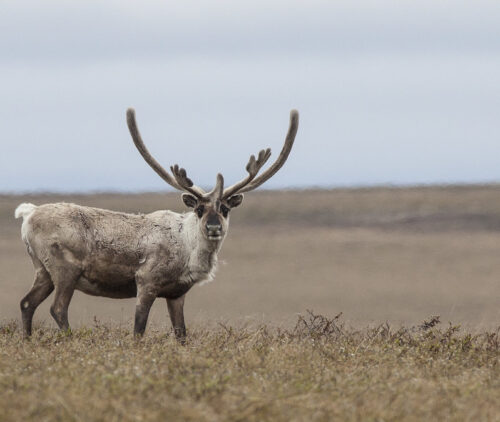
A 45-day Department of the Interior scoping period received plenty of public comments, as the department hopes to create new drilling opportunities In Alaska’s National Petroleum Reserve. Here’s Grandmothers Growing Goodness and Sovereign Iñupiat for a Living Arctic with a statement:
Grandmothers Growing Goodness & Sovereign Iñupiat for a Living Arctic Urge BLM to Protect Communities & Subsistence, Deny AOGA Petition
45 Day Scoping Period Ends Today, July 6
(Nuiqsut, Alaska) – Grandmothers Growing Goodness (GGG) and Sovereign Iñupiat for a Living Arctic (SILA) – Iñupiat and Alaska Native organizations – submitted comments today on the Bureau of Land Management’s Notice of Intent to prepare an Environmental Impact Statement on the Alaska Oil and Gas Association (AOGA) petition to create a production-site approval program in the National Petroleum Reserve – Alaska.
This proposal would fundamentally change how oil and gas projects are approved in the National Petroleum Reserve- Alaska and ultimately silence the communities most impacted by abandoning the project- and place-specific review processes that the law requires.
Below is an excerpt from the comment:
“We want to be clear about one thing, because it is easily misread. Our hunters still bring caribou home, but they increasingly do so by driving farther, hunting in new places, changing when and how they travel, and working around the roads and rigs. That we have adapted does not mean the development has done no harm—it means our whole way of hunting has been forced to change. Nearly half of our people now say there are places they once harvested that they no longer go to at all. A steady harvest number on a page hides all of that, and a rule that reads it as proof that development has little effect would be reading it exactly backwards.”
AOGA’s petition was formally filed on May 12. Three days later, BLM issued a pre-publication notice of intent to prepare an Environmental Impact Statement to support a rulemaking it expects to initiate that may adopt the petition’s proposal in whole or in part.
What’s Included in AOGA’s Proposal:
- New drilling pads, gravel roads, pipelines, and supporting infrastructure could be built across the 23-million-acre Reserve without the site-specific environmental review when impacts on caribou, subsistence hunting, clean water, and permafrost are normally evaluated.
- BLM would be required to approve the plan as long as it includes a checklist of generic mitigation measures.
- Companies would have up to 10 years to start building, with no mechanism to reopen the decision if caribou patterns shift, the climate changes, or new science emerges.
- The government would not be able to rescind approval unless it could prove a company lied in its application.
- The process would apply across the Reserve, including inside Teshekpuk Lake, Utukok River Uplands, and other Special Areas that Congress and the Secretary have set aside for maximum protection of caribou calving grounds, migratory bird habitat, and subsistence resources.
Rosemary also wrote an opinion editorial that was published last week in the Arctic Sounder. She writes:
“Simply put, this proposal would redefine the entire Western Arctic as an industrial energy zone… While we may have different opinions, I hope we can remain united in prioritizing our lives, health, and safety over speculative development projects that carry uncontainable risks. The Special Areas, the Refuge, the caribou, the clean water — these are not political abstractions. They are what we pass to our children. They carry our languages, our food, our practices, and the knowledge of how to live here. Protecting them is not a negotiation.”

Alaska Salmon 2011: Not Too Shabby

Prime Time For Face Time At Sportsmen’s Shows

EPA: Potential ‘Adverse Impacts’ On Bristol Bay Salmon Fishery With Pebble Mine; Comment Period On Draft Study Open Into July
About Author
