

New Polaris Gold Mine Plan To Send Vessels Up The Taku River Drawing Pushback
The following is courtesy of Salmon Beyond Borders:
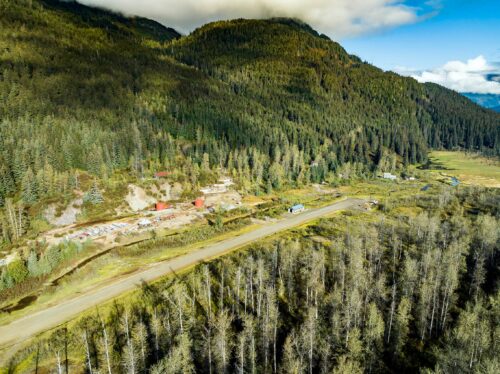
“A spectacularly bad idea:” New Polaris plans “impracticable” large-vessel trips up the Taku River this summer
TUESDAY, APRIL 21, 2026
FOR IMMEDIATE RELEASE
JUNEAU—Salmon Beyond Borders and Taku River businesses and cabin owners reacted with dismay to the news that British Columbia’s New Polaris gold mine project is not only advancing but planning disruptive, impracticable and possibly damaging large-vessel trips from Juneau up the river to the proposed mine site this summer, starting in June.
“It seems like New Polaris is just holding these meetings and getting information but not actually listening to the people who are experienced or dependent on the river,” said Jessalyn Ward, Taku Lodge caretaker. “How many times can you fail until there’s an actual major slip-up? That’s my biggest concern. It’s pretty wild to expect you could come into an area this unknown to you and say, ‘This is the way it’s going to go.’ You can’t compete with Mother Nature.”
“Canagold’s excessively long vessel is a spectacularly bad idea for the Taku, Southeast Alaska’s most productive wild salmon river — and one of the few rivers in Alaska that not only made but exceeded Chinook salmon escapement last year,” said Breanna Walker, Salmon Beyond Borders Director.
“Barging has failed on the shallow, dynamic Taku for a reason — it’s not practicable, as past mining company CEOs have admitted,” said Salmon Beyond Borders advisor Heather Hardcastle, who grew up commercial fishing with her family in Taku Inlet. “With this plan, Canagold is endangering the health and productivity of the Taku River, its salmon, and the people who are connected to it.”
“My property is the farthest upriver private property on the U.S. side of the Taku,” said cabin owner Ed Shanley. “The river gets funneled through a spot that might be 100 yards, at that. I’ve seen a lot of incidents over the years, as far as boats getting into trouble right there. And a lot of folks on the river are on a floodplain and pretty sensitive to bank erosion.”
As of March 31, 2026, British Columbia now considers New Polaris, owned by the Canadian corporation Canagold Resources, to be in the “Application Review” phase of the B.C. Environmental Assessment process. The Environmental Assessment application Canagold recently submitted states that their maximum vessel length will be 25 meters, or 82 feet. However, the craft they plan to use this summer, Inlet Raider, is 16 feet longer than that, at 98 feet. A cursory read of Canagold’s Environmental Assessment application also reveals a stunning lack of detailed fish studies or discussion about how Inlet Raider will avoid scouring or grounding in sensitive salmon habitat.
Canagold now estimates it will need at least 75 barge roundtrips through Alaska waters and on the Taku and Tulsequah Rivers during the New Polaris gold mine construction phase. Keith Boyle, former CEO of Canadian mining corporation Chieftain Metals, which went bankrupt trying to reopen the abandoned and still polluting Tulsequah Chief Mine, stated in his testimony to the legislative Taku River Fact Finding Task Force in 2012 that barging on the Taku is “impracticable.” In fact, Chieftain Metals’ financiers would not support a mining operation that’s dependent on barging (See page four of the Taku task force report).
Barging now appears to be essential to getting the heavy equipment Canagold would need to build an airstrip in key salmon habitat (Flannigan Slough) and a barge landing facility close to the New Polaris mine site near the confluence of the Tulsequah and Taku Rivers. In 2008, a tug operating for another Canadian mining company, Redfern Resources, almost capsized trying to get up the Taku River to the Tulsequah Chief Mine, which has been contaminating transboundary waters with acid mine drainage since even before Alaska became a state from around the corner from the proposed New Polaris mine site.
Taku Lodge caretaker Mike Ward, who served on the 2012 Taku River task force, said one of the issues with barging that the task force identified was that the Coast Guard does not have the ability to get to the site of any potential accident or spill. “They’re transporting things that could be dangerous if spilled. There are environmental concerns. Wake concerns. The whole project itself is just so unfeasible,” he said.
Other shortcomings pointed out by the Taku task force are:
– The need for, at minimum, a registration system for commercial traffic on the Taku River.
– A system requiring commercial vessels to notify state and/or federal agencies when groundings occur.
– Dedicated funding for the State and Federal governments to handle transboundary issues with B.C. and Canada, including funding for the risk management of Canadian mining projects, so that everyone downstream is not relegated to “informal” discussions about development that affects us.
None of that is happening here, with the mine owners informing only a few people about their plans and holding an invite-only meeting about it in Juneau tomorrow.
Resources: Photos of the Tulsequah Chief Mine, New Polaris Mine, and past failed barge and tug attempts on the Taku River are available for media use here.
Salmon Beyond Borders is an Alaska-based campaign working with fishermen, business owners, community leaders, and concerned citizens, alongside Tribes and First Nations on both sides of the Alaska-B.C. border, to defend and sustain our transboundary wild salmon rivers, jobs, and way of life.

Alaska Salmon 2011: Not Too Shabby

Prime Time For Face Time At Sportsmen’s Shows

EPA: Potential ‘Adverse Impacts’ On Bristol Bay Salmon Fishery With Pebble Mine; Comment Period On Draft Study Open Into July
About Author
