

Meet ADFG’s Biologists/Stewards Of Wild Alaska
The following appears in the July issue of Alaska Sporting Journal:
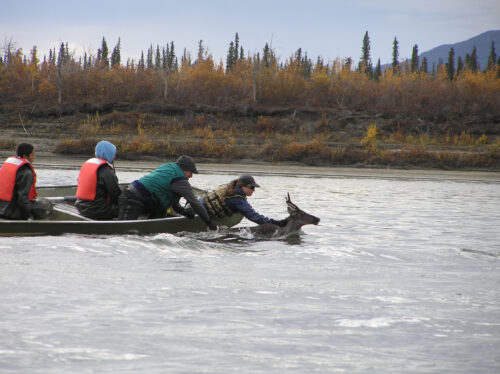
DEPARTMENT OF FISH AND GAME)
Editor’s note: Alaska’s wildlife is sustained by a network of biologists, technicians and field crews working across some of the most remote and complex landscapes in North America.
While hunters and residents see the results in the field and on the ground, much of the effort supporting those opportunities happens behind the scenes, in aircraft, field camps, offices and communities throughout the state.
This installment of Alaska Sporting Journal’s unsung helpers of the wild series highlights four Alaska Department of Fish and Game wildlife biologists working in vastly different regions. From the Panhandle to the North Slope, these profiles offer a look at the people responsible for managing wildlife populations, navigating human-wildlife interactions and helping maintain the systems that keep Alaska’s wild places and the opportunities they provide intact.
BY TIFFANY HERRINGTON
For a wildlife biologist in Alaska, the workday often unfolds unpredictably. There might be a call about a bear inside the Kodiak Landfill, a moose tangled in an Anchorage fence or a narrow break in the weather that finally allows biologists to launch a long-awaited aerial caribou survey. A pending storm may cancel those plans just as quickly.
On the same day, wildlife biologists may be working from helicopters, small aircraft, boats or office desks, moving between field surveys, public outreach and decisions carrying real consequences for both wildlife and the people who depend on it.
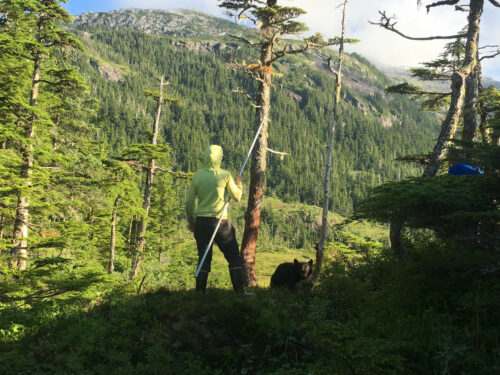
FOR CHARLOTTE WESTING, AREA biologist for Game Management Unit 6 in Prince William Sound and the Copper River Delta, uncertainty simply comes with the territory. She often tells people she manages “anything with hooves or claws,” a shorthand description for a job involving everything from mountain goats and black bears to moose, deer and wolves spread across one of the wettest regions in the state.
A typical day starts indoors, answering emails, talking with hunters or preparing logistics, but the real excitement begins when the weather finally breaks.
“When it gets here, we hit the ground,” Westing said. “Once you’re in the field, it’s the dream work that you can’t believe you get paid for.”
That field time comes with its own challenges. In coastal Southcentral Alaska, weather is not simply uncomfortable. “The weather here can kill you,” Westing said bluntly.
Rain gear is packed in multiples, including what she jokingly calls her “commercial-grade” set, because staying dry is not just about comfort. It is about safety.
“It’s the damp cold that gets you,” she said. “You can be soaked for days.”
Long hours in wet brush, steep terrain and relentless rain are routine, especially during survey season, when narrow weather windows determine whether crews can fly at all. Still, Westing lights up talking about the field. Some days involve flying low over coastal peaks tracking mountain goats. Others mean glassing alpine terrain through rain and fog.
“There’s nothing else I’d rather be doing,” she said.
Westing grew up in a family deeply connected to the outdoors, and she still carries a sense of awe about the places surrounding her. She described one black bear research project that followed how nutrients from salmon move from streams into surrounding forest ecosystems, shaping everything from vegetation to wildlife far from the water itself.
“You realize everything out there is connected,” she said. “The salmon are feeding the mountains.”
Even after years of doing the job, moments in the field still stay with her. She described watching the weather move across Prince William Sound from the air and seeing entire mountainsides disappear into fog while waterfalls poured toward the ocean below.
“There are days where you stop and think, ‘I can’t believe this is my job,’” she said.
Westing also spoke about the responsibility that comes with wildlife management and making decisions with incomplete information.
“You’re trying to make the best decisions you can for both wildlife and people,” she said. “There’s an art to figuring out how to investigate those questions and interpret what you’re seeing in the field.”
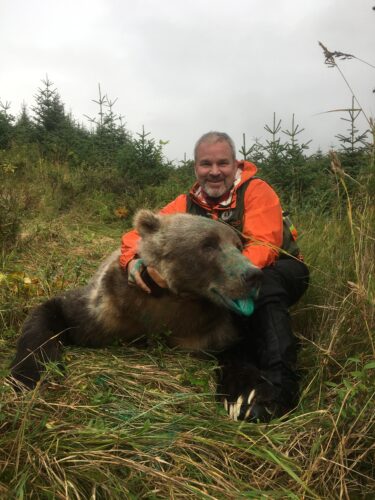
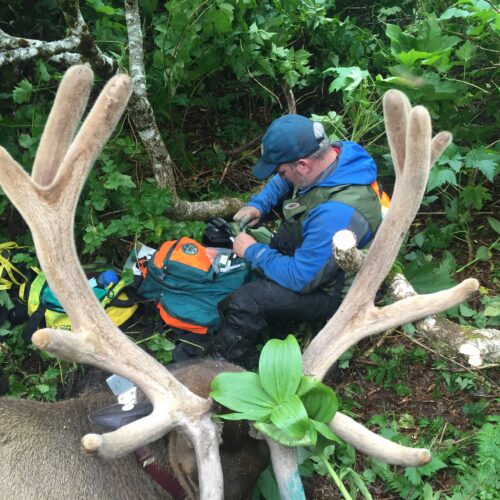
“That’s what keeps it interesting.” (ALASKA DEPARTMENT OF FISH AND GAME)
ON KODIAK ISLAND, AREA wildlife biologist Nathan Svoboda works in an environment where weather, aviation and daily priorities can change without warning. His responsibilities span the Kodiak Archipelago, where brown bears, elk, deer, mountain goats and caribou occupy rugged terrain shaped by storms, steep mountains and isolation.
One morning may begin in a helicopter flying over remote country in search of radio-collared brown bears. Headsets crackle over rotor noise while biologists scan valleys and hillsides below, tracking signals and documenting cub survival in isolated portions of the island.
“No day goes as expected,” said Svoboda, who recalled one day that started quietly with office work, reviewing a manuscript for publication and issuing bear hunting permits before wildlife troopers called about two deer that had fallen through the ice on a local lake. Suddenly, the day moved outdoors, gathering rescue equipment and navigating dangerous ice to pull the animals out safely.
Not long after returning to the office, another call came in. This time, a brown bear had gotten into the landfill. “You can go from paperwork to complete chaos pretty quickly,” he said.
Rather than frustrating him, that constant variation is one of the things he enjoys most. “You never really know what the day is going to turn into,” Svoboda said. “That’s what keeps it interesting.”
Some of his favorite moments happen far from roads or communities, flying over sections of Kodiak that few people will ever see.
“There are places out there that feel completely untouched,” he said. “You realize how wild Alaska still is.”
The work itself can be exhausting. Helicopter surveys often involve long hours in the air while visibility changes rapidly around the aircraft. But those same flights can also produce moments that stay with him long after the workday ends.
“You get to see corners of Alaska most people never will,” said Svoboda, who also appreciates how tangible the work can feel. Research may unfold slowly over years, but the information gathered eventually shapes hunting seasons, harvest limits and conservation decisions throughout the region.
“Providing reliable scientific data that is used to make decisions regarding harvest, bag limits and seasons is not as simple as it may seem,” he said. “A lot goes into it that people never really see.”
Svoboda said he also values the responsibility that comes with handling wildlife directly and contributing to long-term conservation work.
“You want to do right by the animals and the people who depend on these resources,” he said. “That’s always in the back of your mind.”
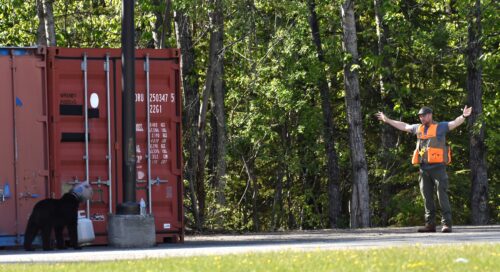
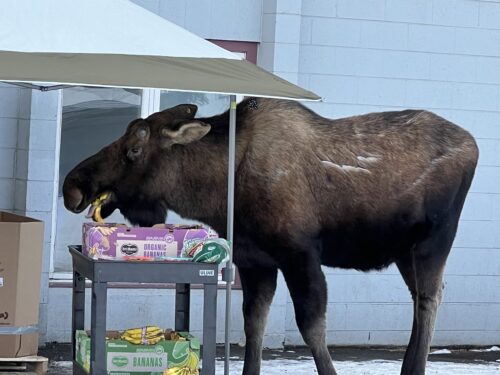
THAT RELATIONSHIP BETWEEN WILDLIFE and public life becomes even more visible in Anchorage, where area biologist Cory Stantorf works in one of the most densely populated areas in the state. In Anchorage, moose calve in greenbelts, black bears move through neighborhoods and salmon streams flow behind subdivisions and shopping centers.
“Day to day, the job is a mix of science and service,” Stantorf said.
Some mornings begin with data analysis or planning aerial surveys. Others start with reports of a moose collision, a bear accessing garbage or a neighborhood conflict involving wildlife.
“Wildlife management is as much about people as it is about animals,” he said.
In Anchorage, that reality plays out\ constantly. A bear wandering through the backcountry may never create concern, but the same animal in a residential neighborhood can quickly become a public safety issue. Residents often have very different opinions on how those situations should be handled, with some advocating for removal and others strongly opposing it.
“There are a lot of emotions involved,” Stantorf said.
Helping residents understand animal behavior has become one of the most important aspects of his job. Securing trash, removing attractants and learning how wildlife moves through urban areas can prevent many conflicts before they begin. “Preventing a problem is always better than responding to one,” he said.
Many residents assume problem animals can simply be trapped and relocated, but in many cases bears return and continue their problematic behavior, or they create conflicts elsewhere.
“People care deeply about wildlife here,” Stantorf said. “But there’s often a disconnect between what people believe should work and what proves effective in practice.”
Social media has added another layer to that challenge. Word of wildlife encounters can spread rapidly online, often before complete information is available, increasing public pressure around already complicated situations.
Even after years in the profession, Stantorf still appreciates how unusual Anchorage really is. “There aren’t many places where you can leave work, drive home and see a moose standing in someone’s front yard,” he said.
People in Anchorage live alongside wildlife every day. Stantorf said those interactions are part of what makes the city unique. In most urban areas, wildlife exists at a distance. In Anchorage, residents experience it constantly, whether it is salmon returning to neighborhood streams or moose bedded down near bike trails and schools.
“You can’t really separate the city from the wildlife here,” he said. “They’re woven into daily life.”
(ALASKA DEPARTMENT OF FISH AND GAME)
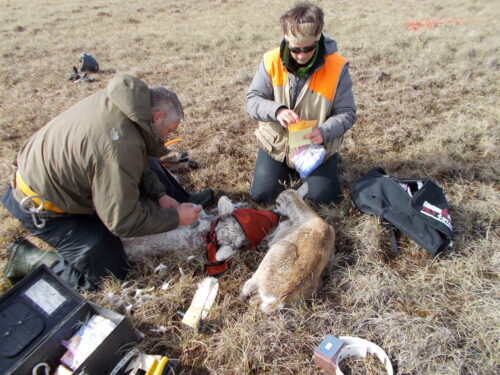
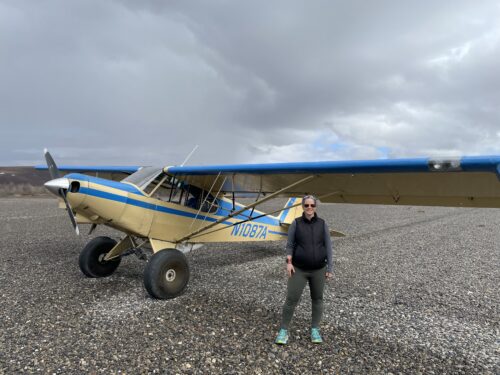
FAR TO THE NORTH, Carmen Daggett works in a completely different world than Stantorf’s. Based out of Utqiagvik, formerly known as Barrow, Daggett is the sole ADFG biologist responsible for Unit 26A on the North Slope. She manages wildlife across a vast Arctic region where logistics often become just as important as biology itself. “I do a little bit of everything,” she said.
Her responsibilities include organizing surveys for caribou, moose and muskoxen, coordinating aircraft, maintaining facilities, preparing reports, presenting to the Board of Game and conducting outreach with local communities and schools. In regions like the North Slope, there is rarely the luxury of specialization. Whatever needs to get done becomes part of the job.
Much of the work depends on aviation. Surveys are often conducted from small aircraft operating out of field camps such as Umiat, where every detail must be planned in advance, from food and fuel to emergency supplies and communication systems. “Logistics drive everything,” Daggett said.
Pilots may need to be scheduled months or even a year ahead of time. Fuel caches must be coordinated carefully. Weather delays are routine, and during parts of the winter darkness itself becomes a limiting factor.
“There are times when you’re dealing with two months of darkness,” she said.
In spring and fall, surveys rely on narrow seasonal windows when snow provides enough contrast for visibility and there’s still enough daylight to fly safely. Fog, wind and poor visibility can shut operations down immediately. Even in that environment, Daggett describes the work with a sense of wonder. She talked about flying across enormous stretches of Arctic tundra, watching caribou move through the landscape and spending time in places so isolated they feel removed from modern life.
“It’s hard to explain how big and wild it feels up there,” she said.
She also spoke about the isolation that comes with the territory. In many parts of Unit 26A, there are no roads, no nearby services and very few people.
“You really have to be self-sufficient,” Daggett said. “If something goes wrong out there, you need to be prepared to handle it.”
At the same time, she values the relationships built with local communities across the region, particularly through outreach with schools and residents. Those interactions, she said, help connect people more directly to the wildlife and places surrounding them.
Daggett said those conversations are especially important in smaller communities where subsistence hunting remains deeply tied to everyday life.
“People out there have such a strong connection to the land and the animals,” she said. “You learn a lot just listening.”
ACROSS ALASKA, OPPORTUNITIES TO gather information often come down to brief windows when conditions finally align. Data collected during those flights and surveys helps shape future hunting seasons, harvest limits and long-term understanding of wildlife populations.
Just as often, though, the profession revolves around communication as much as science. Biologists spend a significant amount of time speaking with hunters, local residents, subsistence users and community groups, helping explain decisions that can directly affect livelihoods and traditions.
“Most of what we’re doing is people management,” Westing said.
Whether responding to bears in. Anchorage neighborhoods, balancing harvest opportunities on Kodiak or coordinating wildlife work in Arctic communities, much of the profession revolves around navigating expectations, emotions and competing priorities. Even with the long hours, difficult weather and constant uncertainty, none of the biologists spoke about the profession with anything less than deep appreciation.
For Westing, it is the opportunity to spend time in Alaska’s wildest places while contributing to a better understanding of the ecosystems surrounding them.
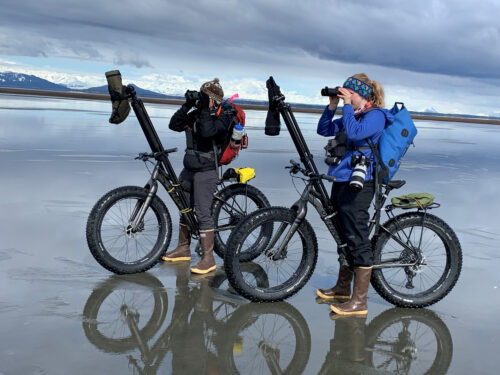
For Svoboda, it is combining field science with work that directly affects both wildlife and local communities. For Stantorf, it is helping people and wildlife coexist in one of the few major cities where those interactions remain part of everyday life.
For Daggett, it is the responsibility of helping ensure wildlife resources remain available for future generations. The work rarely unfolds predictably.Weather closes in, aircraft get delayed and circumstances can change quickly, often forcing decisions to be made with limited time and imperfect information.
Some days are spent gathering data that may shape future seasons years down the road, while others require immediate response, where the outcome affects both animals and people in real time.
Much of it happens far from public view, in aircraft, field camps, offices and communities spread across Alaska, where preparation, judgment and adaptability matter as much as the data itself. ASJ
Editor’s note: For more information on the Alaska Department of Fish and Game’s wildlife management, go to adfg.alaska.gov/index.cfm?adfg=research.main. Tiffany Herrington is a writer based in the Seattle area.

Alaska Salmon 2011: Not Too Shabby

Prime Time For Face Time At Sportsmen’s Shows

EPA: Potential ‘Adverse Impacts’ On Bristol Bay Salmon Fishery With Pebble Mine; Comment Period On Draft Study Open Into July
About Author
