

Keeping Salmon Runs Humming In Southeast Alaska
The following appears in the June issue of Alaska Sporting Journal:
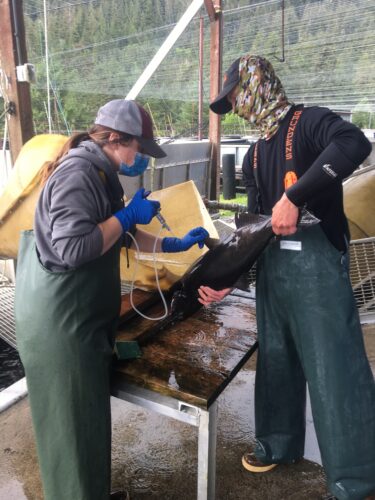
Editor’s note: Alaska’s fisheries are supported by a vast network of hatcheries, biologists, technicians and field crews working behind the scenes across the state. While anglers and commercial fishermen see the results on the water, much of the effort that sustains those opportunities happens far from the spotlight, in remote hatcheries, field camps and research stations.
This series highlights some of these “unsung helpers of the wild,” the professionals responsible for that work. From Southeast Alaska to the Kenai Peninsula, these profiles explore the people who spend their careers raising salmon, monitoring wildlife populations and maintaining the systems that help keep Alaska’s fisheries strong.
BY TIFFANY HERRINGTON
Every summer in Alaska, salmon arrive where they are needed most. They move into trolling grounds and commercial openings, appear in charter waters and subsistence sites, and help fill freezers, support paychecks and sustain a way of life woven deeply into coastal communities across the state.
What most people never see is how much goes on long before those fish come back. Years earlier, many of these salmon were raised, monitored, marked, released and tracked by hatchery professionals whose efforts remain largely out of public view. In Southeast Alaska, one of the people guiding that process is Tessa Frost.
Frost is the general manager of the Southern Southeast Regional Aquaculture Association, better known as SSRAA, a nonprofit salmon enhancement organization whose programs support fisheries from the Alaska-British Columbia border near Ketchikan north to the middle of Southeast Alaska by Petersburg. Her job blends biology, logistics, research, economics and the challenge of planning for results that may not be known for years. For the people who fish those waters, much of that effort becomes visible only when salmon show back up.
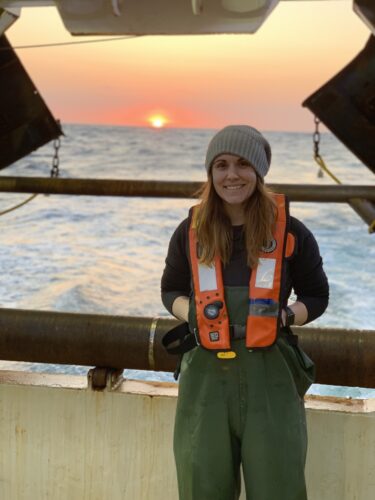
FOR FROST, THE CONNECTION to fisheries began early. She grew up in Ketchikan in a family that spent significant time on the ocean fishing for salmon. Her father worked as a biologist with the Alaska Department of Fish and Game, and his version of the profession left an impression.
“He spent a lot of his ‘work’ time diving, flying in float planes and walking on the wild salmon streams of Southeast Alaska,” Frost said. “Even as a kid, I remember thinking to myself, ‘That seems like a pretty fun job to have.’”
For a child growing up in Southeast Alaska, it was an introduction to the idea that a career could be tied to fish, wild country and the waters that shape life in the region.
That early interest eventually became a profession. Frost attended Michigan State University, where she majored in zoology with a marine biology minor. During summers, she returned home and held seasonal jobs before eventually moving back to Alaska full time and taking fisheries technician positions. Those years in the field proved decisive. “The summers I spent living and working in some of the most beautiful and remote wild salmon rivers in the world solidified my love of Alaska salmon,” she said.
She later earned a master of science in fisheries from the University of Alaska Fairbanks, where her graduate research examined interactions in the Bering Sea between Western Alaska chum salmon and Asian pink and chum salmon, a reminder that forces shaping Alaska salmon often stretch far beyond the state itself.
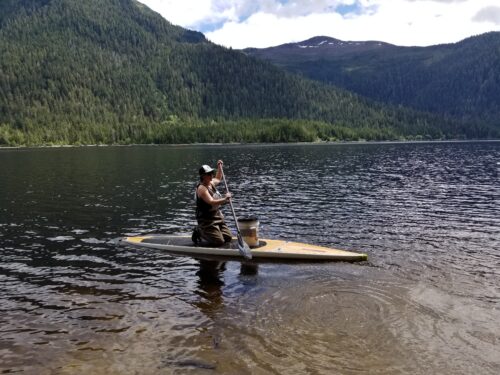
FROST’S HISTORY WITH SSRAA also reaches back years. She first joined the organization as a seasonal fisheries technician while still in college, helping sample commercially caught salmon to determine whether they were hatchery-produced fish or wild in origin. She later returned for another stint helping coded-wire tag SSRAA-produced coho and Chinook salmon, giving biologists another tool to evaluate fish after release and migration.
After graduate school, Frost came aboard full time as SSRAA’s research and evaluation manager, a role that placed her at the center of many decisions most people never think about. She forecasted annual runs, tracked salmon through commercial fisheries, helped determine the value of SSRAA fish to industry groups, and represented the organization in fisheries meetings. When her predecessor retired in January 2026, Frost stepped into the role of general manager.
Founded in 1976, SSRAA is a private nonprofit organization created to enhance and rehabilitate salmon production in southern Southeast Alaska for the social and economic benefit of salmon users. It is governed by a 21-member board that includes commercial fishermen as well as sport, subsistence and Alaska Native user groups. Its mission is to supplement wild fisheries with consistent opportunity, especially in years when natural abundance is lower.
According to Frost, SSRAA releases approximately 3 million Chinook, 9 million coho and 200 million chums across the region. Since 1985, the organization has generated more than $360 million in ex-vessel value and has contributed an average of $15 million annually in salmon revenue to the commercial fishing industry over the past decade. Those fish are also harvested by sport and subsistence users and help support charter businesses throughout Southeast Alaska.
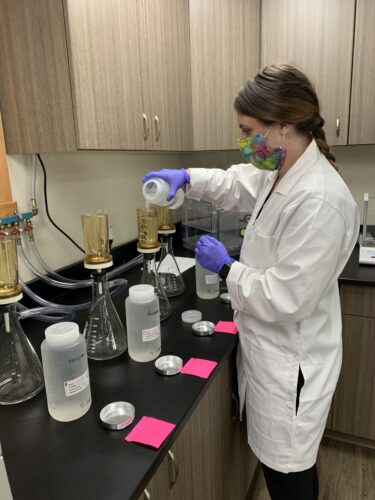
FROM A DISTANCE, HATCHERY operations can sound simple: raise fish, release fish and wait for results. The reality is far less predictable. “I think the biggest challenge of being in this industry is working with live animals in an ever-changing climate,” Frost said.
SSRAA releases chums into the ocean at roughly 2.5 grams. Those fish may return three to five years later weighing around 10 pounds. Chinook and coho are released at about 25 grams and may come back after one to four years, depending on species, weighing 12 to 20 pounds. That means hatchery staff influence only a brief portion of each salmon’s life. Once released, the fish must survive in an unforgiving ocean, locate food, avoid predators and eventually navigate back to the waters where they began. Recent warming temperatures and shifting marine food webs have made those outcomes increasingly difficult to predict, Frost said.
She also hopes more people understand what Alaska hatcheries are, and what they are not. “One common misconception that I hear quite often is people from outside Alaska, or outside the United States, confusing salmon hatcheries with fish farms,” she said.
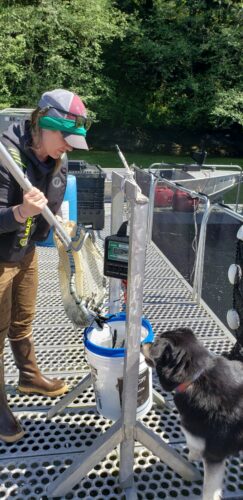
Fish farms raise salmon from egg to harvest in captivity. SSRAA does not. Chums are generally held only a few months, while coho and Chinook are reared for about a year before release into the open ocean. For a chum released at 2.5 grams and returning years later at 10 pounds, Frost notes that 99.9 percent of its body mass is gained at sea. Once SSRAA fish are released, they become property of the state of Alaska and belong to the people who catch them, not the hatchery.
For Frost, another rewarding part of the profession is that no two seasons – and often no two days – look exactly alike. “Something that I love about working at SSRAA is there is no typical day,” she said.
The yearly cycle begins with egg takes from August through October. Eggs are monitored through winter until hatching begins in February. Newly hatched fish are moved into fresh- or saltwater, fed and cared for until release. Chums are typically released in April. Coho and Chinook, which spend longer in freshwater, are generally released the following May. Then comes summer, when adult fish begin to reveal how earlier release groups performed. During that season, SSRAA samples commercial fisheries daily to determine how many harvested fish came from its programs, how old they are and where they were released. That information helps guide broodstock needs, cost-recovery harvests and future planning.
The job can also produce moments few office workers ever experience. “I love having the ability to leave my office at a moment’s notice,” Frost said, “hop into a float plane and hover over thousands of returning salmon.”
And like many fisheries professions, the role carries both reward and frustration. “Working in this industry can be very rewarding when things go right, and very frustrating when things go wrong,” Frost said.
Because hatchery teams care for the salmon during only a small part of their lives, staff focus intensely on raising healthy fish before release. But weather, markets and marine survival remain outside anyone’s control. “At the end of the day, we do our best to raise a healthy fish and hope that it’s enough to help it survive to adulthood,” she said.
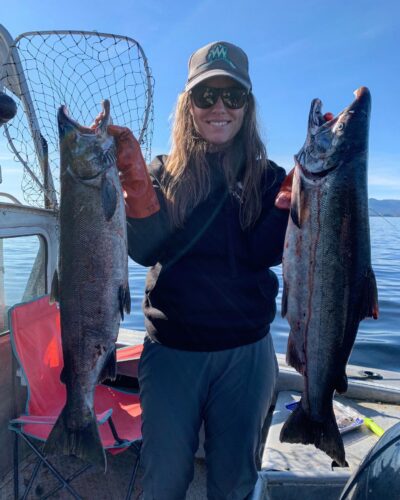
LOOKING AHEAD, FROST SEES promise in transition. SSRAA has experienced significant staff turnover in recent years, as longtime employees retire and move into the next chapter of life. While experience leaves with them, a new generation of employees is stepping in with fresh ideas and renewed enthusiasm. “I am excited to see where they take us and what innovations come from it,” Frost said.
She also emphasizes that SSRAA remains committed to supplementing, not replacing, wild salmon runs. The organization maintains a dedicated research department that evaluates programs and their effects on wild counterparts. Since its inception, SSRAA has spent more than $1 million sampling commercial salmon fisheries in southern Southeast Alaska, and all of its salmon receive identifying otolith marks that allow biologists to determine age and release location.
For many Alaskans, the first sign of salmon season is a fish in the net, on the line or headed upriver. Long before that moment arrives, people like Tessa Frost have already spent years helping make it possible. ASJ
Editor’s note: For more on the Southern Southeast Regional Aquaculture Association, go to ssraa.org and follow on Facebook and Instagram (@ssraaorg). Tiffany Herrington is a writer based in the Seattle area.

Alaska Salmon 2011: Not Too Shabby

Prime Time For Face Time At Sportsmen’s Shows

EPA: Potential ‘Adverse Impacts’ On Bristol Bay Salmon Fishery With Pebble Mine; Comment Period On Draft Study Open Into July
About Author
