

Grandmothers Growing Goodness: Why Alaska’s Sacred Lands Are Worth Fighting For
The following appears in the October issue of Alaska Sporting Journal:
BY TIFFANY HERRINGTON
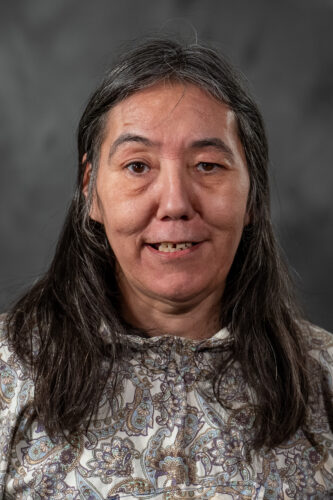
When Rosemary Ahtuangaruak talks about the Arctic, she doesn’t sound like a lobbyist or a policy wonk. She sounds like someone who has spent her life on the tundra, listening to elders, raising children, cutting fish at camp and watching the land change beneath her feet. Her words are not abstract; they are rooted in lived experience, in cultural continuity, in health and survival.
“We are not the sacrifice for the national energy policy,” she says.
Ahtuangaruak, the founder and executive director of Grandmothers Growing Goodness, or GGG, has become one of the most prominent Indigenous voices fighting to protect the Western Arctic and the National Petroleum Reserve–Alaska (NPR-A) from expanded oil and gas drilling. From her home in Nuiqsut, a small Iñupiat village on Alaska’s North Slope, she has carried local concerns
into boardrooms, federal hearings and congressional offices. Her group has played a central role in opposing the Trump Administration’s efforts to open millions of acres of the NPR-A to leasing, a campaign that has pitted subsistence traditions against energy politics in one of the most ecologically rich regions in the world.
ROOTS IN TRADITION AND ELDERS’ GUIDANCE
Ahtuangaruak was born in Fairbanks but raised in a world where food was culture, connection and survival. “We always had our foods,” she recalls. “We would get boxes and coolers, prepare them, and always have family over to share when the boxes came in.”
With the food came stories, games and laughter – until her father walked in, and Iñupiat language was silenced by assimilationist pressure.
She remembers the elders of Nuiqsut pulling her aside, urging her to carry more than medical knowledge into the spaces of decision-making. “They told me, ‘We like that you go to the meetings and talk about life, health and safety, but we also want you to talk about the importance of tradition and culture.’”
That moment changed her trajectory. She was not originally from Nuiqsut – she had married into the village – but the elders made it clear they needed her voice. So she listened.
Her stories flow back to the seasonal games, hundreds of them, played at Christmas and designed to teach strength, agility and endurance for Arctic life: skills for hunting, ice travel and tundra hiking. “The games teach agility for hunting, the strength to hunt the mighty animals that feed our families, and the sharing that binds the generations in the bounty of our lands and waters,” she says.
FROM HEALTH CARE TO LEADERSHIP
Driven by a desire to care for her community, Ahtuangaruak trained as a physician assistant through the University of Washington’s Medex Northwest program. She served as a community health aide for years, often working long shifts under difficult conditions.
Her commitment to health led her into leadership. She was elected mayor of Nuiqsut, a role she never sought for prestige but for responsibility. Then crisis struck. In 2022, the CD1 gas blowout occurred just 8 miles from the village.
“The industry evacuated personnel in front of our village,” she remembers. “That took a long time to deal with, and honestly, I am still worried there are problems from the blowout affecting development.”
The incident highlighted the risks her community faces living in the shadow of oil development. She couldn’t be home for her reelection campaign and chose not to run again. Instead, she founded Grandmothers Growing Goodness.
“GGG allows me to share the work I do with others so they can learn before they must do this work,” she says.
FOUNDING GRANDMOTHERS GROWING GOODNESS: PROTECTING SUBSISTENCE RIGHTS
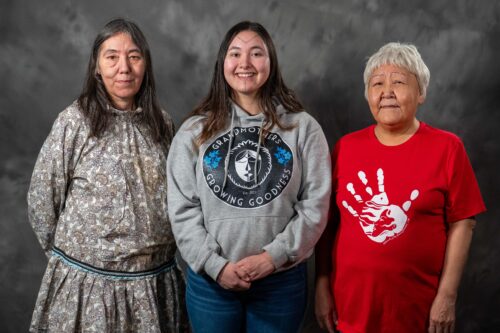
The idea behind GGG is simple but powerful: prepare the next generation. The organization works to mentor youth, educate policymakers and protect subsistence rights. Its mission is framed around three goals:
1.Educate locals and nonlocals about the challenges facing Arctic communities.
2.Mentor the next generation of North Slope leaders.
3.Influence policy at every level to protect health, culture and well-being.
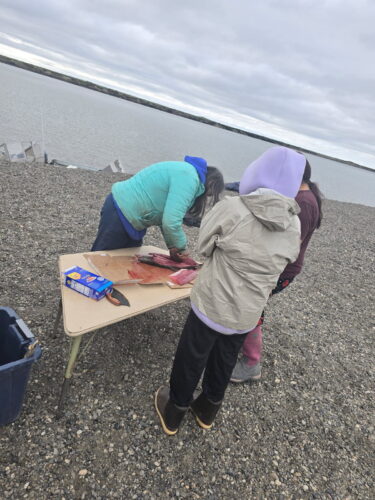
The group has taken young people to fish camp, where they set nets, prepared fish and listened to stories. They’ve traveled to Washington, DC, to meet with lawmakers. They’ve testified at public hearings and filed detailed comments on oil and gas projects.
Every effort is about amplifying voices that might otherwise be ignored. As Ahtuangaruak puts it: “By continuing to be involved, there are many who recognize the effort. There have been invitations to educate decision makers. Educating agency researchers, universities and colleges helps to give a seat. Amplifying the volume of concerns helps decision makers dim the confusion.”
THE WESTERN ARCTIC UNDER THREAT
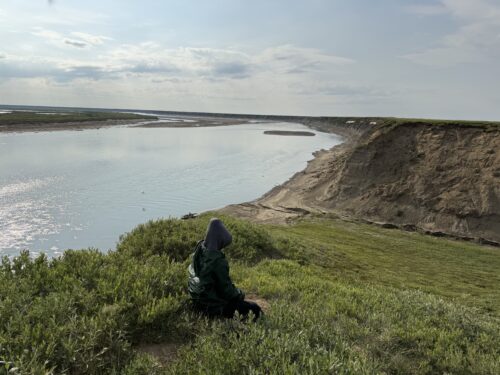
If there is one place that defines GGG’s work, it is the Teshekpuk Lake Special Area, part of the NPR-A. The lake and surrounding tundra are home to the Teshekpuk Caribou Herd, vital to local subsistence hunters. The Colville River cliffs host nesting raptors. Nearly 200 species of migratory birds arrive each summer from every continent. Offshore, bowhead whales, belugas and seals sustain coastal communities. But this abundance is fragile.
“We have threats to 82 percent of the reserve,” Ahtuangaruak warns. “Every acre is open to their onslaught. Teshekpuk Lake, Colville River, Peard Bay, Kasegaluk Lagoon, Pik Dunes – all need protections, as they are all unique and provide different assets. They are special for the village that relies upon them.”
The dangers are not hypothetical. She points to reinjection wells near Umiat, where contamination has already been found in fish. She describes how invasive grasses spread across industrial fields, crowding out plants that caribou prefer. She recalls the endless flaring of natural gas – 80 days straight before the CD1 blowout – sending tons of emissions into the air.
The impacts ripple through everyday life. A helicopter once drove caribou into the water just as her son shot his first animal. The harvest was lost. “He is suffering the social disruption of drug use and is still facing demons from this,” she shares. “Precaution is needed and prevention is key.”
WHERE SUBSISTENCE MEANS LIFE, HEALTH, SAFETY
For Ahtuangaruak, subsistence is more than food; it is identity, health and resilience. She remembers trading fish for seal and caribou for salmon; aunties picking berries with grandbabies; elders teaching children to value sharing by giving away a first catch.
“We harvest the seasons, from the fish under the ice to the bowhead whales, beluga, walrus, seals, caribou and plants,” she says. “We share the food amongst our extended family.”
This sharing is not symbolic. It sustains life in villages where store- bought food is expensive and often unhealthy. It anchors community bonds. It teaches respect and responsibility.
But every disruption – whether from seismic testing, helicopters, or industrial traffic – chips away at these practices. “Infrastructure and failed maintenance affected fish migrations, and this devastation created social stressors that hit the village and made it very hard,” she says.
To her, protecting subsistence is inseparable from protecting public health. “When you have had to hold those little eyes trying to breathe and they come back again, you keep asking questions,” she says. “You look for answers from elders, CDC, APHA, and elsewhere.”
CHALLENGES EXTEND BEYOND NORTH SLOPE
GGG’s fight doesn’t end at the village boundary. One of the greatest obstacles is simply being heard in decision-making spaces dominated by industry.
“The biggest challenges are getting beyond the North Slope, to Juneau, and to DC. Decisions are being made away from the village that will suffer the reaction, leaving our concerns behind as industry sets many tables without us,” she explains.
Still, she persists. With GGG and partner groups like Sovereign Iñupiat for a Living Arctic and Native Movement (silainuat .org), she has filed comments, given testimony and joined coalitions. Wins have been hard-fought – like the Biden Administration’s 2024 rule establishing new protections in the NPR-A, which GGG celebrated, only to see it targeted for repeal under Trump’s White House.
MENTORING THE NEXT GENERATION
Perhaps the most hopeful part of GGG’s work is its focus on youth. Fish camps bring dozens of young people to the riverbanks, where they learn to cut fish, listen to stories and gain a sense of belonging. Students have joined her in Washington, DC, seeing firsthand how advocacy connects to their future.
“Students are active in school, and I share in the classrooms and they learn,” she says. “Some have traveled to DC with GGG already. When they ask what else they can do to help, our work is a rewarding response.”
These moments keep her going. “There are little eyes waiting for your help to breathe without flares,” she says.
LOOKING AHEAD
Ahtuangaruak dreams of a future where special areas around Nuiqsut are safeguarded from drilling, young hunters don’t have to compete with helicopters or ice roads and subsistence traditions are passed on intact.
“The ability to have areas that do not have oil and gas development, that protect the use for our hunting, fishing, whaling, gathering and other activities … would be very appreciated by us,” she says.
She knows the fight is long, but she also knows it’s necessary. “The future we want or the future they deserve is not the same,” she says. “We want to continue to be Iñupiat in the Arctic, living as our elders taught us, feeding our families as they brought us from our land and waters into the future generations.”

HOW TO HELP THEIR CAUSE
For readers thousands of miles away, the struggle for the Arctic might feel distant. But Ahtuangaruak insists everyone has a role. “See the migrations, connect to the Arctic, care to comment,” she says.
GGG encourages the public to submit comments during public input periods on Arctic drilling, donate to local organizations like Grandmothers Growing Goodness, and learn and share stories about the Arctic’s ecological and cultural importance.
Her call is urgent but hopeful. The Arctic is still alive, resilient and worth protecting.
“We want to continue to be Iñupiaq in the Arctic,” she says, “living as our elders taught us, feeding our families with the foods we need, in the places we need them, when we need them to be there. Giving the taste of life, health and safety and the importance of tradition and culture.” ASJ
Editor’s note: For more on Grandmothers Growing Goodness, check out its website (grandmothersgrowinggoodness.org) and follow on Facebook. Tiffany Herrington is a Seattle-area-based writer.

Alaska Salmon 2011: Not Too Shabby

Prime Time For Face Time At Sportsmen’s Shows

EPA: Potential ‘Adverse Impacts’ On Bristol Bay Salmon Fishery With Pebble Mine; Comment Period On Draft Study Open Into July
About Author
