

Donlin Mine Gets More Traction To Proceed; Mother Kuskokwim says “Project Poses Existential Threats”
The Donlin Gold Mine is getting closer to proceeding in its Western Alaska location near the Kuskokwim River area. The Federal Permitting Improvement Steering Council announced it plans to fast-track the project. First up, here’s the press release with the news:
WASHINGTON (October 27, 2025) – The Federal Permitting Improvement Steering Council (Permitting Council) is pleased to announce the FAST-41 coverage of the Donlin Gold project. The project’s estimated mineral reserve is approximately 34 million ounces of gold, a valuable commodity included in President Trump’s Executive Order on Immediate Measures to Increase American Mineral Production.
“On behalf of the Permitting Council I am proud to welcome the Donlin Gold Project to FAST-41 coverage,” said Emily Domenech, Permitting Council Executive Director. “The Permitting Council has developed an exciting and vital partnership with the state of Alaska since the start of the Trump Administration, and I am thrilled to see yet another Alaskan project receiving support as we work to bring the United States’ incredible natural resources to the world’s stage.”
Located 277 miles northwest of Anchorage, Alaska, the Donlin Gold project encompasses the construction of a surface mine, a 316-mile natural gas pipeline, a natural gas power plant, advanced processing facilities, designated waste management areas, and the necessary transportation infrastructure to support year-round operations. According to project sponsors, the project’s comprehensive development plan is designed to bring environmentally responsible development and significant opportunities to the Yukon-Kuskokwim region and Alaska.
“We’re grateful to the Permitting Council for including Donlin Gold in the FAST-41 program,” said Todd Dahlman, General Manager at Donlin Gold. “This milestone brings us one step closer to responsibly advancing the project through this improved federal coordination program, with its predictable permitting timelines and improved public transparency. We remain committed to listening to and engaging with our landowners, the communities of the Yukon-Kuskokwim region, and the public every step of the way.”
Construction of the proposed project is anticipated to take 3-4 years. Project sponsors expect the Donlin Gold project to operate as a key gold producer for the next 27 years. Donlin Gold LLC, owned by NOVAGOLD Resources Inc. and funds managed by Paulson Advisers LLC, are the company owners of this project. The U.S. Army Corps of Engineers leads federal permitting for the project, which obtained its federal permits in 2018, and is undertaking a Supplemental Environmental Impact Statement in response to a remand order from the Federal District Court in Alaska on June 10, 2025. Learn more about the Donlin Gold project on the Federal Permitting Dashboard.
About the Permitting Council and FAST-41
Established in 2015 by Title 41 of the Fixing America’s Surface Transportation Act (FAST-41), the Federal Permitting Improvement Steering Council (Permitting Council) is a federal agency charged with improving the transparency and predictability of the federal environmental review and authorization process for certain critical infrastructure projects. The Permitting Council is composed of the Permitting Council Executive Director, who serves as the Council Chair; 13 federal agency Council members; and the Chair of the White House Council on Environmental Quality and the Director of the Office of Management and Budget. The Office of the Executive Director coordinates federal environmental reviews and authorizations for projects that seek and qualify for FAST-41 coverage, which are in turn entitled to comprehensive permitting timetables and transparent, collaborative management of those timetables on the Federal Permitting Dashboard.
Learn more about the Permitting Council at permitting.gov.
Alaska U.S. Senator Lisa Murkowski (R) was pleased with the decision:
Here’s a statement from Mother Kuskokwim over concerns for Kuskokwim River’s salmon runs:
Mother Kuskokwim Statement Condemning Donlin Gold Project’s FAST-41 Designation
BETHEL, ALASKA— The Mother Kuskokwim Tribal Coalition condemns the Federal Permitting Improvement Steering Council’s decision to add the Donlin Gold project to its Fixing America’s Surface Transportation Act (“FAST-41”) list. This insensitive federal action is particularly inappropriate while our region’s Tribes are waiting on the mine’s federal permitting agencies to address flaws identified by a federal court and, more importantly, responding to the humanitarian crisis following the hit our region took from Typhoon Halong. A rushed permitting process threatens to override critical environmental protections and silence Yukon-Kuskokwim communities who depend on healthy rivers for survival.
The Donlin Gold project poses existential threats to the Kuskokwim River and communities sustained by its waters for thousands of years. In addition to raising utility rates for residents by up to $265 per year, the project would generate massive amounts of cyanide-laden tailings and require a 316-mile natural gas pipeline across pristine landscapes—all threatening salmon runs already in crisis and subsistence resources Alaska Native families need to survive.
FAST-41 was designed to streamline transportation infrastructure, not to circumvent community threats or expedite projects that repeatedly fail environmental review and permitting standards. The Permitting Council’s decision ignores that many Alaskans—particularly Alaska Natives in the Yukon-Kuskokwim Delta—have grave concerns about this mine project.
Project sponsors claim commitment to “listening to and engaging with” communities, yet pursuing accelerated permitting while fundamental questions remain unanswered tells a different story. This is corporate profit prioritized over Indigenous rights, subsistence ways of life, and environmental protection.
We call on the Army Corps of Engineers to complete a rigorous Supplemental Environmental Impact Statement addressing all judicial concerns before issuing any permits. Federal decision-makers must honor their trust responsibilities to Alaska Native peoples and recognize there can be no fast track when entire ecosystems and communities hang in the balance.
The Kuskokwim River is not a commodity. It is the lifeblood of our region. No amount of gold can take its place.
More reaction from Earthjustice:
Fast Tracking of Permitting for the Donlin Gold Mine Further Erodes Trust Among Yukon-Kuskokwim Tribes
A federal permitting council added the Alaska gold mine to its list of projects for expedited permitting
ANCHORAGE, AK — On Monday, the Federal Permitting Improvement Steering Council (Permitting Council) added the Donlin Gold project to its list of projects covered by FAST-41 permitting. FAST-41 is a government program that certain projects can apply for in order to receive expedited environmental reviews and permitting.
Six Southwest Alaska tribes filed a legal challenge to the mine’s federal permits in federal court – and won a victory on a key claim. That victory requires the two main federal agencies responsible for permitting the Donlin mine to supplement the project’s environmental and subsistence studies to examine the risks of a much larger tailings spill at the mine.
Fast-tracking this project through this process risks harming the public and Tribes who must live with the consequences of the mine, including a potential catastrophic tailings spill.
FAST-41 is a voluntary federal permitting process available only to certain projects who apply for it and are eligible. Mining is not an appropriate industry to be covered under Title 41 of the Fixing America’s Surface Transportation Act. Mining has more harmful impacts than any of the other covered sectors and produces vast quantities of waste, including toxic waste, that must be managed in perpetuity.
Following are statements from our clients and from Earthjustice attorneys:
“This move does nothing to earn our trust; to the contrary it further erodes it,” said Orutsararmiut Traditional Native Council President Gage Hoffman. “We won on one of our key legal challenges in federal court, and as a result, the mine’s permitting agencies must supplement the project’s environmental study to examine the risks of a much larger tailings spill at the mine. With that should come a thoughtful, transparent and deliberate process – not the speeding of up of permitting for a project that has dire consequences for our region.”
“Earthjustice has long objected to adding mining as a covered industry under this statute that was designed for transportation projects,” said Earthjustice attorney Maile Tavepholjalern. “We don’t think this expedited permitting is appropriate for any mining projects, period. The consequences for communities that could be harmed by mining projects are too important. Our clients who oppose the Donlin mine won a victory in federal court last year requiring federal agencies to more thoroughly and accurately scrutinize the consequences of a tailing dam failure. What our clients deserve is a more careful review and sufficient time and opportunity to comment on the new analyses that must be done. Fast tracking of the permitting that could potentially including limiting public comment is harmful to our clients.”
Background
The Donlin Gold Mine project, if built, would reportedly be the largest pure gold mine in the world. The company is expected to extract 556 million tons of ore to produce about 30 million ounces of gold over the 27-year life of the mine — and would generate 2.5 billion tons of waste rock, some of which would generate acid drainage. It’s possible the project could be even larger; Donlin is currently working on a feasibility study for the project and has indicated that the actual scope could be even larger than originally planned and studied in the 2018 environmental impact statement.
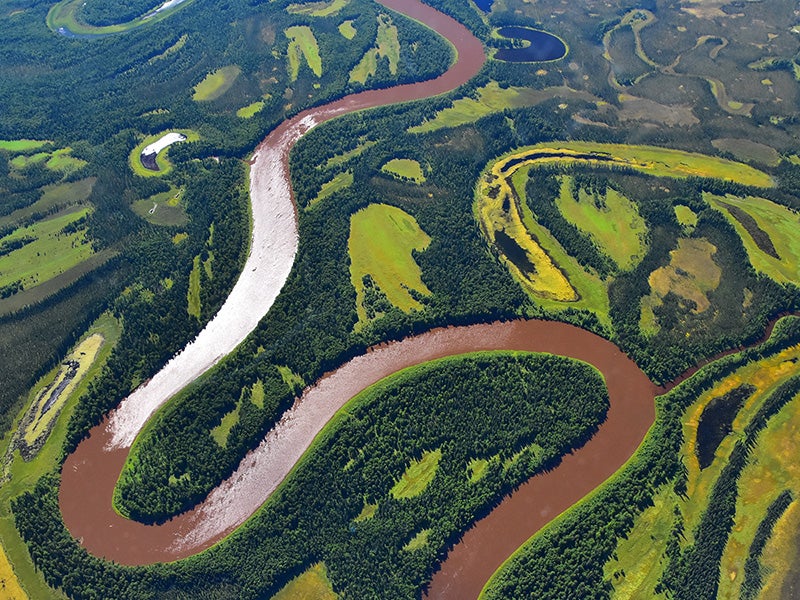
Kuskokwim River, in southwest Alaska. The Donlin mine’s massive industrial operation will destroy thousands of acres of wetlands and streams and cause permanently elevated levels of dangerous metals in local water. (Peter Griffith / NASA)

Alaska Salmon 2011: Not Too Shabby

Prime Time For Face Time At Sportsmen’s Shows

EPA: Potential ‘Adverse Impacts’ On Bristol Bay Salmon Fishery With Pebble Mine; Comment Period On Draft Study Open Into July
About Author
