

ADFG Announces 31-Day Wolf Trapping Season On Prince Of Wales Island (GMU 2)
The following is courtesy of the Alaska Department of Fish and Game:
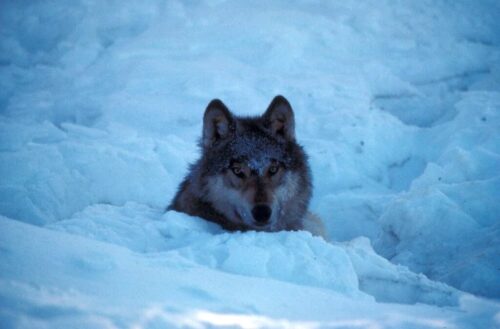
Wolf trapping season opening for 31 days in Game Management Unit 2
CRAIG, Alaska – Biologists with the Alaska Department of Fish and Game (ADF&G), in cooperation with the USDA Forest Service, determined 31 days of trapping opportunity for wolves in Game Management Unit (GMU) 2 will result in a sustainable level of harvest. State and federal wolf trapping season opens Nov. 15, 2025, and will close at 11:59 p.m. on Dec. 15, 2025. State and federal wolf hunting seasons in GMU 2 opened on Sept. 1 and will close concurrently with the trapping season.
“Since we started this strategy in 2019, we’ve seen an average harvest of 30% of the estimated population, which has proven sustainable so far,” said Anthony Crupi, Regional Supervisor for ADF&G. “If conditions change going forward and our analysis determines less or more harvest is needed, we can alter the opportunity window accordingly.”
Background
In GMU 2, most wolves are harvested by trapping, so state and federal managers regulate harvest by varying trapping opportunity. Determining the amount of trapping opportunity that will result in sustainable harvest involves analyzing recent population estimates, trends in trapper participation, documented harvest rates, and regulatory guidance. Harvest rate, or the number of wolves harvested per day of trapping season, is related to trapping effort, trapping conditions, and wolf abundance. Since the implementation of this management strategy in 2019, harvest averaged 30% of the annually estimated population. Scientific literature suggests this harvest rate is sustainable, and the management history also suggests this harvest rate is currently sustainable.
For fall 2024, ADF&G estimated the preharvest GMU 2 population to be 245 wolves with high confidence the true population size was within the range of 194 to 309 wolves (95% confidence interval). This estimate is similar to those from 2021 to 2023 indicating a steady trend in abundance estimates. This trend indicates the population is stable and that harvest is being sustainably managed.
Population estimates
ADF&G, with support from the Forest Service and cooperation from the Hydaburg Cooperative Association (HCA), estimates GMU 2 wolf abundance annually using a DNA-based mark-recapture technique. ADF&G, USFS, and HCA collected wolf DNA samples using hair boards within ADF&G’s study area on northern and central Prince of Wales Island, and in HCA’s study area to the south. ADF&G and designated sealers also collected tissue with the consent of trappers from harvested wolves. DNA from tissue, along with accurate reports of when and where individual wolves were harvested, contributed to the population estimate.
Estimating the GMU 2 wolf population takes about 10 months, so each year’s population estimate is used to inform harvest management in the following year. For example, the fall 2024 estimate informs GMU 2 wolf harvest management for this season. ADF&G and USFS establish annual hunting and trapping season closure dates to allow meaningful harvest opportunity while ensuring the population remains sustainable.
Sealing requirements
State sealing regulations for wolves harvested in GMU 2 require all hides to be sequentially numbered by the hunter or trapper, who must call the ADF&G Ketchikan office at (907) 225-2475 within 7 days of take to report the date and location of take, and all hides must be sealed within 15 days of take. These regulations are intended to provide more precise data for managers to use when calculating population estimates.
Federally qualified users harvesting wolves on federally managed land in GMU 2 may also seal wolves under federal subsistence regulations. Federal sealing regulations require wolves taken in GMU 2 to be sequentially numbered, marked with the date and location recorded by the trapper for each wolf, and all hides must be sealed within 15 days of take.
All GMU 2 trappers are encouraged to provide foreleg bones and small samples of muscle tissue and hide from each harvested wolf to ADF&G or designated sealers. Hide and tissue samples provide DNA for the population estimate. Foreleg bones are used to age harvested wolves. The proportion of harvested wolves in each age class (pup or adult) is an indicator of the population’s productivity and survival.
Please call the ADF&G Ketchikan area office at 907-225-2475 for more information. For more information from the USDA Forest Service, please call Tongass Subsistence Coordinator Robert Cross at 907-723-8653. Maps of federal lands within GMU 2 are available at Forest Service offices. Maps and additional information on the Federal Subsistence Management Program can be found on the web at http://www.doi.gov/subsistence/index.cfm.

Alaska Salmon 2011: Not Too Shabby

Prime Time For Face Time At Sportsmen’s Shows

EPA: Potential ‘Adverse Impacts’ On Bristol Bay Salmon Fishery With Pebble Mine; Comment Period On Draft Study Open Into July
About Author
