

A Steward For Alaska’s Wildlife Refuges: USFWS’ Lisa Hupp On Her Rugged Wilderness Office
The following appears in the May issue of Alaska Sporting Journal:
Editor’s note: This feature continues Alaska Sporting Journal’s ongoing “Alaska Women and the Outdoors” series, highlighting women whose lives and work are rooted in Alaska’s wild places and the stewardship of the lands and waters that sustain them.

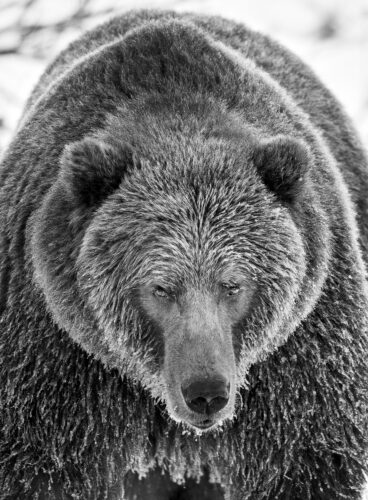
of the state’s national wildlife refuges, including as a skilled photographer capturing closeup shots of Kodiak brown bears. (LISA HUPP/USFWS)

BY TIFFANY HERRINGTON
Across Alaska, millions of acres of tundra, wetlands, rivers, forests and coastline are protected within the National Wildlife Refuge System. Many of these places are remote enough that only a small number of people will ever set foot there, yet the work that sustains them unfolds year after year through field crews, refuge staff and partnerships with local communities.
For Lisa Hupp, that work has shaped the course of her career.
Hupp serves as acting assistant refuge supervisor for the Alaska Region of the US Fish and Wildlife Service’s National Wildlife Refuge System, based in Anchorage. In that role she helps support refuge operations across the state, working on a wide range of projects that sustain some of the most important wildlife habitat areas in North America.
Her path into that work began far from an office.
FROM THE DOCKS TO THE BACKCOUNTRY
In 2004, Hupp arrived in Alaska for a seasonal job as a dock laborer with a seafood shipping logistics company in Unalaska. The work was physical and demanding, often unfolding outdoors along the waterfront in every kind of weather. Long shifts on the docks meant hours watching tides move through the harbor and wildlife move along the shoreline.
“I remember flying over Cook Inlet for the first time and seeing that low, pink winter light hitting the mountains,” she says. “It felt like a major shift in scale.”
Even after two decades in Alaska, the memory remains vivid. She can still picture snow reaching down to the rocky beaches in winter, wild iris blooming in summer and thick stands of beach grass and pushki climbing the hillsides above the harbor. Working outside also meant frequent encounters with wildlife, and those early days along the coast gave her plenty of time to observe the rhythms of the landscape.
“There were always eagles and fox along the coastline,” she says. “Being outside like that gave me a chance to really watch the seasonal changes in light and color.” Those experiences eventually led her toward a career working on Alaska’s public lands, helping support the stewardship of wildlife refuges that stretch across some of the most remote and ecologically important landscapes in the country.

LEARNING TO LOOK AT THE LANDSCAPE
Hupp’s connection to the outdoors began long before she arrived in Alaska. She grew up in remote areas of the Pacific Northwest, where her father worked for the US Forest Service, and much of her childhood unfolded in national forests and parks. Her father also loved photography and often documented the landscapes around them on Kodachrome slides, later sharing them in informal slide shows.
“He would give slide shows of the places we had been,” she says. “Those images are foundational childhood memories for me.”
More importantly, those experiences taught her how to look closely at the landscape itself. Her father used time outside as an opportunity to explain photo composition, pointing out repeating mountain ridges or the way a single tree might anchor a scene. Those lessons stayed with her when she began taking photographs herself in high school and college, where she followed the same instinct to focus on wild places and landscapes.
Wildlife photography came later, particularly after she began working in Alaska’s refuge system. One early turning point came in 2005 when she traveled from Unalaska to Kodiak and took a seasonal job as a park ranger with Alaska State Parks on remote Shuyak Island at the northern edge of the Kodiak Archipelago. Before flying to her duty station, she bought her first digital SLR camera and spent the following months photographing the landscape, plants and visitors exploring the island by kayak and fishing boat during her free time.
She edited her favorite images at the end of the season and shared them with the park for outreach and educational materials. The experience reinforced something she had already begun to suspect: Carrying a camera encouraged her to look more carefully at the places she was working.
“It becomes a way to record what you’re seeing in a place,” she says, “and a way to experience the landscape more closely.”

WORKING ON REFUGE TIME
Hupp later joined the staff at Kodiak National Wildlife Refuge, where she spent a decade working primarily at the visitor center in downtown Kodiak. Although much of her work was based in town, the opportunities to spend time on the refuge itself left a lasting impression.
“I was lucky enough to repeatedly visit some incredible parts of it,” she says. Kodiak’s famous brown bears quickly became one of her favorite wildlife subjects to observe.
Spending time alongside biologists studying the bears helped deepen her understanding of their behavior and their place within the broader ecosystem.
“The more time I spent watching them and following biologists who study their movements, behavior and diets, the more I appreciated their intelligence and individualism,” Hupp says. “The ways they interact with each other and the landscape are endlessly fascinating.”
When she photographs wildlife or field work, patience and observation matter more than technical perfection. She often recalls a piece of advice she once heard from another photographer: “just ‘f/8’ and be there,” meaning that while technical preparation matters, the most important thing is simply being present.
“In these places you may only get one chance to capture something,” she says. “You can’t count on cooperative weather or wildlife.”
For Hupp, photography becomes less about equipment and more about witnessing.
“It’s about watching and listening for those glimmers of connection,” she says. “What I hope to achieve is an interpretation that honors what I witnessed while offering viewers a way into that experience themselves.”
A DAY IN THE FIELD
When Hupp gets the opportunity to spend time photographing work on Alaska’s refuges, the days are long. One example she describes involves remote bird research camps on the Arctic’s Coastal Plain or within the Yukon Delta National Wildlife Refuge. These temporary camps often sit an hour or more from the nearest community and are reachable only by small bush plane.
Field crews begin early. Someone starts coffee in a large stovetop percolator while everyone prepares breakfast and packs enough food and water to spend 10 to 12 hours outside. Layers of clothing, chest waders and heavy packs are standard gear. While the biologists carry research equipment, Hupp’s pack typically holds camera bodies, lenses, tripods, spare batteries and memory cards, as well as rain protection for the gear.
The teams split into pairs and head out across trailless tundra, sometimes traveling 4 to 6 miles from camp as they check nests and survey wildlife. Hupp typically photographs while the group is moving or during brief stops, careful not to slow the research crew unnecessarily.
“I’m usually photographing while in motion or during short breaks,” she says. “I don’t like to slow down the crew.”
But the work doesn’t always end when the field teams return to camp. During Alaska’s long summer days, the best light often comes late at night.
“Some of my favorite images happened at midnight,” she says.
Even after the fieldwork ends, the process continues. Reviewing images, organizing files, editing photographs and adding metadata can take far longer than the time spent capturing the images in the first place.

CONNECTING PEOPLE TO WILD PLACES
For Hupp, imagery and storytelling can play an important role in conservation work. Alaska’s refuges are vast and often difficult to access, meaning that many people who care about them may never see them firsthand. Images can help bridge that distance.
“Photography and storytelling help connect places, wildlife and people,” she says. “They can build awareness and appreciation that deepens into genuine connection and care.”
Sometimes those connections appear in unexpected ways. She has received emails from people who discovered her images and felt inspired by them. One person wrote to say a photograph of a Bohemian waxwing in falling snow inspired a fiber arts project. Another shared that a photo of a deer eating fireweed encouraged her to continue habitat restoration work behind her home.
“I love hearing from people who found something meaningful in the photographs,” Hupp says.
Within the refuge system, imagery also helps illustrate research, highlight partnerships with local communities and provide a window into the work happening across Alaska’s public lands.

WOMEN IN THE FIELD
Like many women working in outdoor professions, Hupp has seen change over the course of her career. When she first arrived in Alaska, she was one of only two women working at the seafood shipping company in Unalaska. Initially, she did not receive the same training opportunities on heavy equipment as some of the male recruits.
But several coworkers stepped in to support her.
“They believed I could do the work and supported me with their own training,” she says.
Eventually, Hupp became one of only four people in the company certified to operate the massive winches used to load frozen fish cargo onto large shipping vessels.
“It’s something I’m still proud of,” she says.
Looking back, she believes that persistence and self-advocacy are key to building a career in the outdoors.
“It’s important to advocate for what you need to develop and be successful,” she says, “and to challenge limiting beliefs – especially when they’re your own.”

A LARGER STORY
One thing Hupp hopes people come to understand about Alaska’s refuges is that they are not empty wilderness.
“These aren’t places at the edge of some mythic frontier,” she says. “They are places that sustain Alaskans and attract visitors from around the world.”
They are also traditional homelands where Indigenous communities maintain deep cultural relationships with the land and wildlife. Those relationships remain an important part of conservation work today.
Wildlife itself often connects these landscapes to places far beyond Alaska. Shorebirds that nest on the Arctic National Wildlife Refuge, for example, arrive each summer from multiple migration routes that link Alaska to Midwestern farm fields and South American beaches.
“Even in migration, these places connect Alaska refuges to the rest of the world,” she says.

LOOKING AHEAD
Today much of Hupp’s work takes place behind a desk in Anchorage, coordinating projects and supporting refuge operations across the state. But opportunities to return to the field still matter deeply.
She hopes to spend some time this summer filling temporary assignments at refuge stations where additional support is needed.
“I’ll always treasure any chance to spend time on the land,” she says.
Kodiak, where she spent a decade working with the refuge, still calls her back whenever she has the opportunity to visit. And if that visit happens to include time watching Kodiak’s famous brown bears along a riverbank, she knows she’ll likely have a camera nearby.
“I’ll always be ready to grab my camera,” Hupp says. ASJ
Editor’s note: For more on the Alaska region of the US Fish and Wildlife Service, go to fws.gov/about/region /alaska.

Alaska Salmon 2011: Not Too Shabby

Prime Time For Face Time At Sportsmen’s Shows

EPA: Potential ‘Adverse Impacts’ On Bristol Bay Salmon Fishery With Pebble Mine; Comment Period On Draft Study Open Into July
About Author
