

USFWS On Anchorage’s Preventative Measures To Curb Invasive Plants
The following is courtesy of the U.S. Fish and Wildlife Service:
Not in our backyard
The largest city in Alaska steps up invasive plant prevention measures
Mar 27, 2026
Written By

Recognizing the devastating impacts invasive species can have, the Anchorage Municipal Assembly approved an amendment to the municipal prohibited list of invasive plants on Dec 2, 2025. The amendment included the addition of 16 specific species, plus previously restricted species by State of Alaska Department of Natural Resources. This is a step toward success in continuing to protect natural and urban wildlands in and around Anchorage – and all of Alaska.
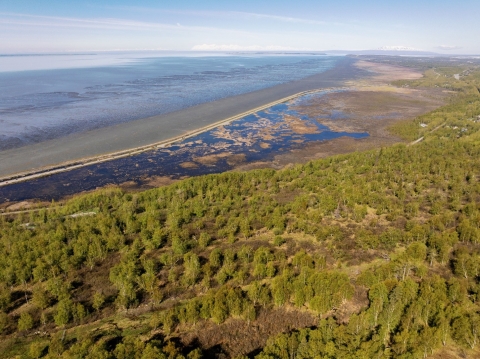
Invasive species management requires collaboration.
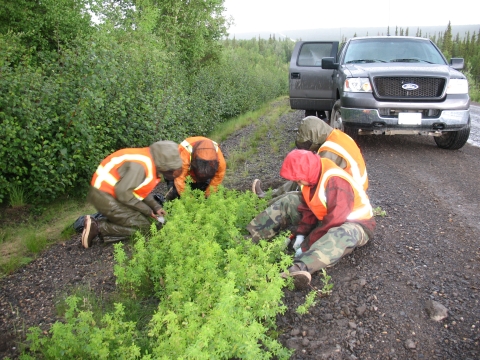
Christopher Harwood/USFWS
Anchorage Soil and Water Conservation District coordinates the Anchorage Cooperative Invasive Species Management Area (ANC-CISMA), who led the charge on these changes. ANC-CISMA is a partnership between federal, state, municipal, and tribal government agencies, non-profit groups, and private citizens with the common objective of preventing the spread of non-native species in Anchorage. Through ANC-CISMA, local citizens and land managers work together to identify the common needs, priorities, and goals.
As the largest community and transportation hub in the state, Anchorage has a high potential for invasive species introductions and spread of existing species to remote areas across the state. Ornamental landscape and garden plants can escape yards into wildspaces. In addition, visitors and residents alike can unknowingly pick up invasive seeds or plant fragments in boot or vehicle treads, outdoor gear, equipment, or clothes. Those seeds can then hitchhike into new communities and wildspaces.
Across Alaska, there have been significant efforts to identify invasive plant species likely to cause large impacts to native ecosystems. In 2008, the Alaska Center for Conservation Science, in collaboration with biologists, land managers, and weed scientists across Alaska, developed an invasiveness ranking system that organizes plants on a scale from 0-100. Larger numbers representing higher invasive probability/impacts. This allows invasive species practitioners across the state to prioritize efforts on species that are “highly” or “extremely” invasive.
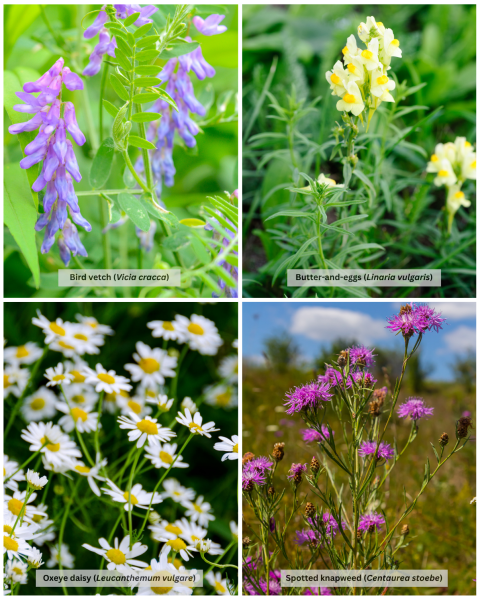

Who’s on the list
In 2017, Anchorage Municipal Assembly prohibited the sale of two invasive species – bird cherry or mayday trees (Prunus padus) and reed canary grass (Phalaris arundinacea). Both species can be detrimental to native plants and animals. In fact, bird cherry has been the documented cause of moose calf deaths! Now these two prohibited species are joined by 16 other invasive species on the prohibited.
As amended, after May 31, 2026, it is unlawful to distribute:
- Bird Cherry or Mayday Trees (Prunus padus)
- Reed Canary Grass (Phalaris arundinacea)
- Itadori or Japanese Knotweed (Fallopia japonica)
- Giant Knotweed (Fallopia sachalinensis)
- Bohemian Knotweed (Fallopia x bohemica)
- Himalayan Knotweed (Persicaria wallichii)
- Siberian Peashrub (Caragana arborescens)
- Chokecherry (Prunus virginiana)
- Spotted knapweed (Centaurea stoebe)
- Meadow hawkweed (Hieracium caespitosum)
- White sweet clover (Melilotus albus)
- Yellow sweet clover (Melilotus officinalis)
- Bird vetch (Vicia cracca L. ssp. cracca)
- Butter-and-eggs (Linaria vulgaris)
- Rampion bellflower (Campanula rapunculoides)
- Mouse ear hawkweed (Hieracium pilosella)
- Oxeye daisy (Leucanthemum vulgare)
- Creeping buttercup (Ranunculus repens)
- All species listed in Alaska Administrative Code 11 AAC 44 34.020(a)
- All plant species quarantined from entry to Alaska by the Alaska Department of Natural Resources
Why does it matter
When established, these now prohibited invasive species can outcompete native vegetation, harm animal and plant life, reduce visibility and passage for humans, and decrease human usability of natural lands. Prohibiting the sale and distribution of invasive species is a key step toward safeguarding natural and urban areas in Anchorage and across Alaska.
What you can do
- Learn to identify invasive species
- Clean gear, boots, and vehicles
- Opt to grow native plants
- Join a local cisma or AKISP
- Report any suspicious plants or animals
– Call 1-877-INVASIV (1-877-468-2748)
– Use?Alaska Department of Fish and Game Online Invasive Species Reporter
Stay up to date with Anchorage Cooperative Invasive Species Management Area: https://www.anchorageinvasives.org/

Alaska Salmon 2011: Not Too Shabby

Prime Time For Face Time At Sportsmen’s Shows

EPA: Potential ‘Adverse Impacts’ On Bristol Bay Salmon Fishery With Pebble Mine; Comment Period On Draft Study Open Into July
About Author
