
Up Sh*T Creek: Part II Of A Sunken River And Argo Ordeal
The following appears in the February issue of Alaska Sporting Journal:

BY SCOTT HAUGEN
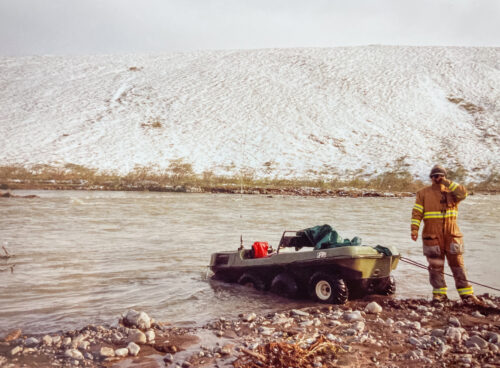
Editor’s note: In part one of this story, which ran in last month’s issue of Alaska Sporting Journal, during a late August 1994 snowstorm near their home in Anaktuvuk Pass, Scott Haugen and his moose hunting partner, the late Ben Hopson, faced a major crisis after trying to drive Hopson’s Argo across the rushing, bone-chilling waters of the Kalutagiaq River. The ATV became stuck in the stream, and they couldn’t be sure that their desperate calls for help over the CB radio had actually transmitted out.
Ben Hopson and I stood in the icy waters of the Brooks Range river with his disabled Argo and planned our next move. We knew our future would be determined in the next few minutes.
Snow began falling more intensely and temperatures continued to plunge. Rapidly, the bone-chilling water made its way into our boots. A few minutes later our feet turned numb, our boots now full of water. We both wore insulated rain gear, so our calves and knees remained somewhat warm despite being submerged in the river.
Knowing we would have to make a move soon, Hopson elected to take his pack and attempt wading the river to get a fire going on the far shoreline.
As he eased into the stream, Hopson began shuffling across the speedy current to the gravel bar. After a few yards it became evident the challenge was more taxing than anticipated. Underestimating the power of the raging river, Hopson struggled with all his might to maintain his balance. The water curled up around his chest, slamming into his 6-foot, 1-inch frame and creating a wall of water that made it difficult for me to see anything but his head. Miraculously, he made it to the other side, his legs wobbling from the strain of fighting the current and frigid water.
While Hopson walked around the gravel bar trying to invigorate his circulation and regain some coordination, I began feeling the numbness making its way up my calves. I would soon have to make a decision.
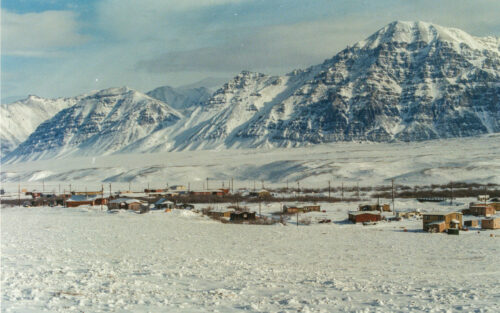
I HELD MY RIFLE, a pack and another bag of accessories. Hopson knew I could not ford the river with such a load, as the current was simply too powerful. He shouted as loud as he could, but I could barely hear him over the roaring river. He said he was going to try making
his way back to me and help carry the survival gear to shore. Less than halfway to me, the rapids became too strong and Hopson was forced to retreat back to the gravel bar. My legs were numb. I had to make a move.
Suddenly, a flash of light from a knoll 1 mile downriver from where I stood caught my eye. The setting sun managed to cast light through the cloud-choked sky, and I miraculously happened to glance in the right direction at the right moment as it reflected off the windshield of an oncoming Argo. I hollered to Hopson, but he couldn’t see the Argo from where he stood. I shouted that I had spotted an Argo and would try staying where I was until it arrived. Five slow minutes passed. I had been in the water for over 15 minutes. The numbness in my legs turned to throbbing, aching pain as I prayed the Argo would quickly appear.
I was overjoyed when I saw the Argo burst through the willows about 50 yards behind Hopson. Cause for still more elation was the fact I spotted a winch on their front end. It’s a good thing I was able to remain in the river as long as I did, for there was no way a person could have waded the river and attached a winch line to the Argo, which I stood on, as the current engulfing it was too strong.
Our rescuers, Jimmy Jack and Raymond Paneak, began unreeling cable as Hopson grabbed the end of the line and waded in my direction. Ten yards from me was as close as Hopson could get. After gathering a bunch of slack cable in his hand, Hopson whirled the hooked end around in the air and let it fly. I caught it and instantly kneeled on the back of the Argo. I reached underneath and attached the hook to the frame. Water slapped my face and torso, and it rushed into my jacket. I was soaking wet, but a surge of adrenaline kept me going.
WITH THE CABLE FIRMLY secured and Hopson back on the bank, they turned the winch on. Not knowing if it could handle the weight of the Argo and the force of the rampaging river, I held on and hoped to feel movement. The cable grew taut and the Argo slowly crept toward the bank. I turned my back so as not to catch the end of the cable in the face should it snap. I struggled to maintain my balance against the rapids and erratically moving Argo.
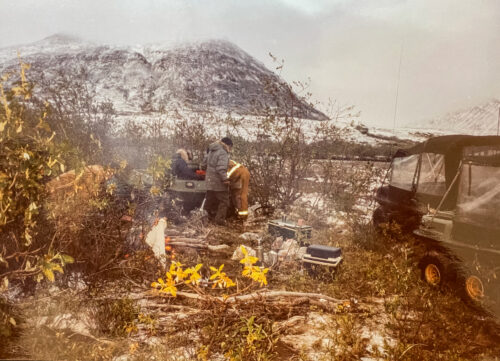
Within minutes I was pulled to safety. As the Argo emerged from the river, water poured out of it from everywhere. Once on dry land, we let the Argo continue draining and Hopson and I joined Raymond beside a fire he’d built while I was being towed to safety.
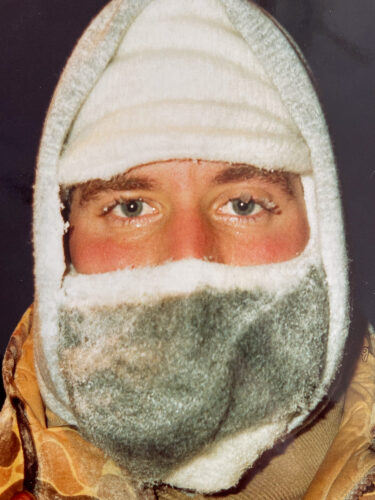
The time was after 6 p.m.; the temperature was 12 degrees. We stripped off our ice-covered clothes, boots and socks and hung them on willow branches around the fire to dry. We huddled around the blaze and had some hot coffee. The warmth of the fire engulfing us stung at first. The hot coffee was a comfort I’ll never forget. We felt safe while gazing at burning embers of fire as they spiraled into thin air. The fear of hypothermia, even death, had dissipated.
As we stood around the fire, Jimmy and Raymond told us how they had heard my distress call on the CB and how we got cut off in midsentence. They immediately headed our way. Fortunately for us they were still in CB range. It was a true miracle.
Ten minutes later another Argo arrived. Riley Morry and Roosevelt Paneak had also heard our cries for help and had been following the river for over half an hour trying to find us.
Within minutes our Argo was completely covered in ice and already an inch thick in places. Within 30 minutes our clothes were dried and we slithered back into them. We did all we could to thaw out the Argo. We chipped away ice on the outside with large river rocks. We placed several round river rocks in the fire, and they turned red-hot. Then we placed them in the hull of the frozen Argo to try melting the ice-entombed engine.
While waiting for the engine to thaw, we investigated the machine to learn why it had stalled in the middle of the river. Hopson discovered a clump of squirrel hair that had made its way into the fuel line and clogged it. Squirrel hair! Of all things, and how it got in there was beyond us.
For over an hour we tried to thaw the frozen Argo, but to no avail. It was simply too cold and the ice too thick. It was getting late and we figured it best to leave the Argo behind and start home, back to Anaktuvuk Pass. After traveling a quarter-mile upstream, we safely crossed the river and arrived back in the village shortly after 2 a.m. On our way home we radioed Ben’s wife, Dorothy Hopson, who called my wife, Tiffany, and told her what had taken place and that we were OK but going to be home late. As had happened so many times upon my tardy return from hunting trips, I was greeted at the door by my lovely wife and hot food.
WE CAME HOME EMPTY-HANDED without having seen any moose, Dall sheep or caribou. But most importantly, Hopson and I returned home alive. Had we been forced to spend the night in the chilling conditions – just the two of us – who knows what the outcome would have been. The challenges faced on every venture into this unforgiving part of Alaska made it such that I considered it a successful trip every time I safely returned home. This day was no different. We had cheated death, and we knew it.
With late summer’s temperatures still above freezing during the day, it wouldn’t take long for the Argo to thaw. A decrease in snow and rainfall ensued and the river level dropped to the point where crossing it was safe. A few days later Hopson and a couple other men made the 15-mile ride back to the Argo. Though they couldn’t get it running, they were able to tow it back to the village.
Once the Argo was cleaned up, Hopson and I were back on the hunt, as we were in need of meat for winter. ASJ
Editor’s note: For signed copies of Scott Haugen’s best-selling book, Hunting The Alaskan High Arctic, visit scotthaugen.com. Follow Scott’s adventures on Instagram and Facebook.
Flight Of The Fledglings

Alaska Salmon 2011: Not Too Shabby

Prime Time For Face Time At Sportsmen’s Shows
About Author
