
Famed Outdoors Writer And Editor Lamar Underwood’s Alaska Connection
The following appears in the March issue of Alaska Sporting Journal:
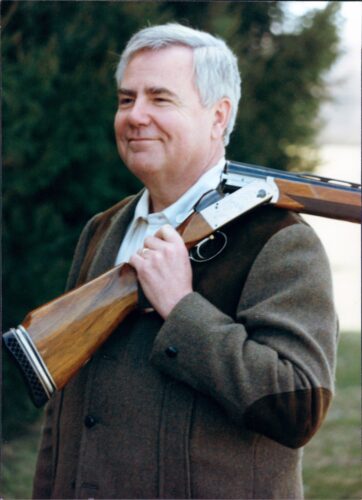
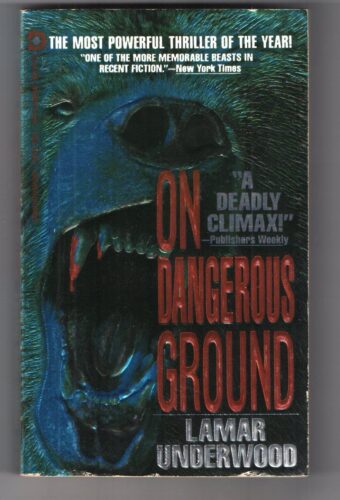
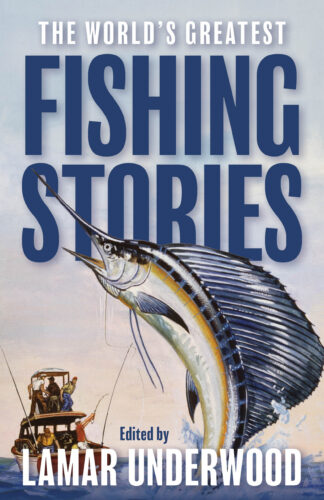
Editor’s note: Chronicling some of the greatest words from outdoor writers is part of Lamar Underwood’s DNA. A longtime editor at revered fishing and hunting publications Sports Afield and Outdoor Life, he has both written books – such as his 1989 Alaska bear attack novel On Dangerous Ground – and edited collections of short stories ranging from Theodore Roosevelt’s hunting tales to dispatches from the battlefield. His most recent compilation, The World’s Greatest Fishing Stories, features bylines from some sluggers in the field, including Zane Grey, Ernest Schwiebert, Nick Lyons and Ernest Hemingway (Underwood also penned a chapter on the latter literary giant). Along with sharing an excerpt from his book about salmon fishing in remote Norway, Underwood wrote the above essay on both his time in Alaska and a storied career as an outdoors editor.
BY LAMAR UNDERWOOD
On a map – or globe if you have one – draw a line from Savannah, Georgia, to Seattle, Washington, and you will see that it cuts almost all North America into diagonal halves.
The distance from Savannah to Seattle is 2,887 miles, and with my mother, brother and two sisters I rode that route in Greyhound buses in late August 1952. After an overnight in Seattle, we flew in a propeller-driven Pan-Am DC-6 up the coastline to Fairbanks – smack in the middle of Alaska.
From our seats on the right side of the airplane, the views were mind-boggling spectacular. That was pure luck, because we did not know that savvy travelers always took the right side going to Alaska, with the coastline view instead of the sea, and the left side returning from Alaska.
Our luck held later in the journey when on an approach through fog to Juneau, Alaska’s capital city, I had my face against the window as I saw brown, waving marsh grass seemingly close enough to touch. We broke off the approach and continued to Fairbanks, but to this day I still recall the marsh views that could have ended in an aviation disaster.
I did not know it at the time, but that day was the beginning of a lifetime good-luck link with Alaska.
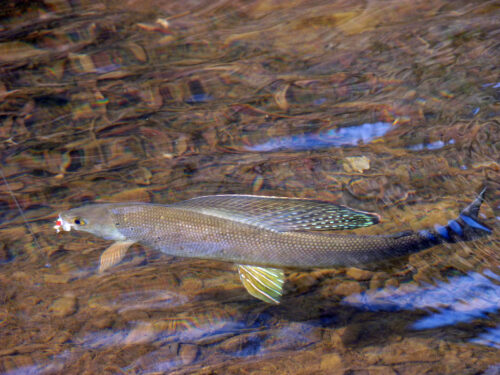
MY FATHER, LIEUTENANT-COLONEL JOHN Douglas Underwood, was waiting for us in Fairbanks and had been waiting since April. His Army radar early-warning unit was stationed at Fairbanks’ Ladd Air Force Base, and though the Korean War had been raging since June 1950, and quarters were being built at Ladd, there were none available when we arrived. Civilian quarters were hard to find, and expensive, and rather cabin-like. My sisters shared one bedroom, my mom and dad another, while my brother and I made do with a fold-open couch in the living room.
I was a junior in the 11th grade, my brother two years behind me, my sisters in elementary school. I could walk to school a few blocks away on Cushman Street. I see on Google Earth that the school building is still there, despite its school days being long past, and the main town center still sprawls beside the Chena River. Finally, in January, in the coldest and darkest days of winter, we got our quarters at Ladd, with an Air Force bus taking us kids to school.
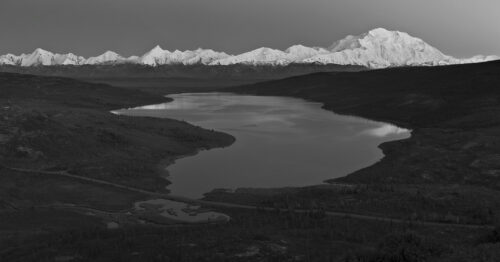
We wore Army-surplus parkas as we waited for the bus on the street outside our condominium-type quarters. On clear days, across miles of tundra, we could see the frozen hulks of the Alaska Range – the mountains called Deborah, Hayes and Hess – looming on the southern horizon, the right side ending in infinity.
As I looked at the storied peaks of hunting, fishing and trapping adventures, IknewthatIonlyhadtogotothe parking lots of the University of Alaska on the northern side of Fairbanks, where I could gaze across miles of seeming emptiness, to see the grandest peak of them all – Denali, the “High One,” the “Home of the Sun.” Alaskans called it “The Mountain.” Books called it “Mount McKinley” because that was the name given it by a young Princeton University graduate during an early exploration to celebrate his president’s support of the gold standard. (Most people do not realize today that Denali is the most prominent mountain in the world, from the bottom to the top. Its bottom starts at 2,000 feet, its peak is 20,300. Mount Everest’s peak is 29,029, but the base of the mountain is already 14,000 feet.)
My dreams of living in a hunting and fishing paradise – still a territory, not even a state – were quickly swept aside by a very hard reality: Alaska had very few roads. Its best hunting, fishing, trapping and wilderness living sites were scattered throughout its vastness.
A few roads like the Steese Highway, going north out of Fairbanks, and the highway south to Big Delta and a few points beyond, were well used. And they provided access for some of my greatest days afield. But the wilderness of Alaska, then and now, is the domain of the float plane, which uses skis in winter.
Float planes fill the state’s skies daily, carrying Alaskans to places roads have never reached, serving Alaskan needs like family cars. Aviation is one of
Alaska’s greatest activities. The terrain and weather, however, are frequent killers of pilots who cannot handle the conditions or the planes needed to fly in them, or, sometimes, plain old bad luck.
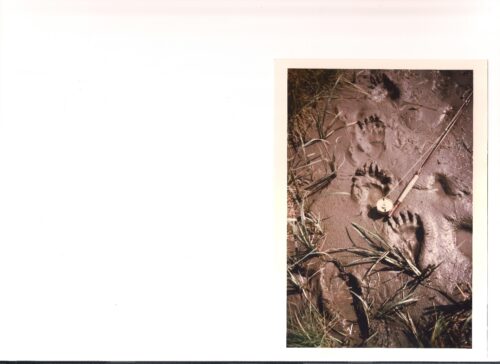
SINCE THERE ARE NO trout north of the Alaska Range, and salmon were in places we didn’t know about or could only be reached by float plane, our fishing adventures were confined to Arctic grayling and northern pike. The big Tanana River and its Shaw Creek tributary, plus the Chena River upstream from Fairbanks, were our fishing holes. And everybody else’s, as we quickly learned.
We caught and ate some pike and grayling (the grayling were a new and wonderful tasty treat), but this was not the Alaska fishing we had been dreaming about.
Our hunting was better, even though we were not big game hunters. The country around Fairbanks was not on a caribou migration route, but locals bagged one occasionally and did well enough with moose to keep freezers full. Before winter clamped down with thermometers so low they were frightening, we had consistent action with grouse and ptarmigan, snowshoe hares and ducks. The grouse and ptarmigan were kicked up from brushy covers alongside the roads we could travel. Shooting birds on the roads themselves was strictly prohibited and led to fines for some hunters. (We’ll talk more about the grouse hunting in an episode to come later in this narrative.)
We were tipped off on duck hunting by a couple of airmen from Ladd Field. They took us with them on a long nighttime drive headed south past Big Delta to the area around Northway. There were abundant mallards and pintails in a spot worth keeping secret, which we did.
(JACOB W. FRANK/NATIONAL PARK SERVICE)
WHEN OUR FAMILY LEFT Alaska at the end of May 1954, the day after Fairbanks High graduation, Alaska was still a territory and there were many shortcomings to my 11th- and 12th-grade education. Nevertheless, I had already been blessed with experiences that would open doors and help build a professional background that would serve me to this day. I was made editor of the high school newspaper, named The Paystreak, and with the help of my English teacher I had a part-time job writing for Jessen’s Weekly newspaper.
Another bond with Alaska strengthened my special connection shortly before our graduation ceremony at the end of May 1954. I opened a copy of the May issue of Field & Stream, and there with excellent color paintings by artist Bob Kuhn was the complete text of Ernest Hemingway’s long story “Big Two-Hearted River.” Every word – parts one and two. The details of the story and how Hemingway wrote it are covered in a Nick Lyons story in the latest editions of my fishing anthologies, The World’s Greatest Fishing Stories. I do not want to include redundant coverage here, but I do want to say that the inclusion of the story by editor Hugh Grey was one of the bravest I had ever seen. The storyis about a simple trout fishing camping trip, using grasshoppers as bait. The story is an American classic, still being read and republished today. It confirms my personal admiration of Hemingway’s prose and like many others, confirms my view that Hemingway critics who have never been hunting or fishing don’t know what they’re talking about.
THE MANY YEARS THAT followed Alaska leave much to tell, but the peak event of all my years was being made editor of Sports Afield in 1970, succeeding Ted Kesting. He had built the magazine from its fledgling days in Minneapolis through its purchase by Hearst in 1953. Its current circulation during my years as editor was 1.35 million. Field & Stream and Outdoor Life, the other members of the so-called “Big Three,” both reached 2 million and beyond,
However, Hearst, my parent company, refused to chase them. So we languished at 1.350 million while emphasizing newsstand sales which were well over 200,000 every month. Field & Stream and Outdoor Life were even better. I was destined to leave Sports Afield and become editorial director of Outdoor Life in 1977.
As I write these words in 2026, the magazine world has shifted like tectonic landmass plates moving. Most of the titles that have survived are part of the digital world. Some have a few actual copies that you can hold in your hands and read. But there is very little space on newsstand racks, and cracking into them takes effort and money; lots of effort and money.
As a sworn and card-carrying print man who swears he will never change, I can look back with fond memories to the climactic years of the magazine business. In 1968, when I first sold a magazine article, you had to work your way past the “slush pile.” That was the name given to the stacks of unsolicited manuscripts waiting to be considered, begging to be considered. InmagazineslikeSportsAfield,there were usually dozens waiting in the mail room. In big magazines like The Saturday Evening Post there were many hundred. The only way your submission won’t be trapped in the slush pile is to be famous or published somewhere, or having an editor who glances at your manuscript, expecting nothing, but is hooked by your story idea or your prose. If the editor’s eyes glaze over with boredom, you’ll become the owner of a freshly printed rejection slip. Sometimes – there’s that lucky break again – an editor might scribble a note on a rejection slip, like “try us again.” Such encouragement was heaven-sent.
Getting out of the slush pile wasn’t easy, and it was impossible if your manuscript was not professionally presented and you had not studied your market. Both requirements are in place today, with book submissions even tighter. Except with very, very few exceptions, you can’t sell a book without an agent. And your chances of getting an agent are between nil and none. Today’s fledgling writers are fortunateinhavingavailabledozensof books on writing, agents and editing.
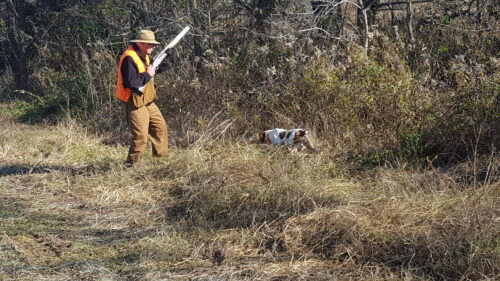
My own slush pile escape was made possible by Hugh Grey, editor of Field & Stream. He liked a quail hunting story of mine so much that he assigned a photographer, Wade Thornton, to join me quail hunting in Georgia to shore up the weak gallery of photos I had submitted. In those early days I regarded Field & Stream as something holy. My heroes were Robert Ruark, who wrote the “Old Man and the Boy” column, plus memorable features, and included Corey Ford, Warren Page, A. J. McLane and, towering over them all, Ted Trueblood.
I worshipped every word of Ted Trueblood like he was a saint. I had read somewhere that he had come to work at the New York office of Field & Stream from being a freelancer in Idaho. Steady jobs are clarion calls to freelancers who don’t know when their next payday will happen. Trueblood lived in Westchester County and took the train to New York every day. Then one day his nextdoor neighbor dropped dead from a sudden heart attack. Immediately, Trueblood went back to Idaho and began his lifetime work of writing for Field & Stream and Fawcett’s True magazine and their special editions.
It was Trueblood who became part of my Alaska connection two years after I was back in the continental U.S. in college. His article in the September 1954 Field & Stream was about grouse and ptarmigan hunting in Alaska. In Fairbanks! My Fairbanks! Along my roads! I had been trying to tell anybody who would listen that some of the grouse were the same type of ruffed grouse we hunted in Pennsylvania and New England. Now I had Ted Trueblood in my Alaska cosmos.
As things turned out, my quail hunting article was still in production when I visited Hugh Grey in his New York office, completing a childhood fantasy. I had seen Hugh Grey introduced by Ed Sullivan on Sunday night television. He showed me the layout planned for my article (it ran in the September 1959 issue) and told me much about the realities of freelance writing life. I made up my mind to try for a staff job when I had gained more experience. I sold a couple of other articles to Field & Stream and six to Sports Afield, where I landed a staff job in New York in 1967. Editor Ted Keating liked my work and gave me promotions over the next three years, culminating with being made editor of Sports Afield in 1970.
MY GLORY YEARS, WHEN I was editor of Sports Afield and could hunt and fish anywhere in the world I wanted to, got off to a shaky start. In my beloved Alaska, death was only a heartbeat away on a rainbow trout/salmon trip to a camp on the Alagnak River out of King Salmon. This trip to the Alaska Peninsula was my first – and almost my last.
A well-equipped guide and another angler were with me when we boated upriver, looking for a good spot to fish by wading along the bank. Our fly rods were rigged and ready. The guide and the other angler headed upstream straight away, while I diverted toward an open sandy bank beside the alder thicket a few yards downstream.
I pushed aside a cluster of alder bushes, and there in front of me was a vision that stopped time and froze me like a statue. I couldn’t move or cry out.
I had almost stepped on a grizzly track. The huge paw print was still oozing water from the claw marks. I glanced around, quickly at first, then slowly as I looked upstream for my companions. They had disappeared around a bend in the alders. My heart felt like an explosion in my chest. I wanted to yell, yet I wanted to remain invisible at the same time.
During the long minute or so it took me to regain my composure, I gradually became aware of a new threat: a deep, musty odor like a wet rug. My misery deepened into complete terror. My mind kept flashing images of a bear attack. There were no accessible TV or movie documentaries of bear attacks back then. However, my imagination flared with images of blood and guts being torn to shreds.
To my credit, I did not try to run screaming from that spot. Instead, I managed to carefully reach into my wading vest and pull out a small camera. I clicked one image and was putting the camera away when I heard voices from upstream. My companions had returned. The event was over.
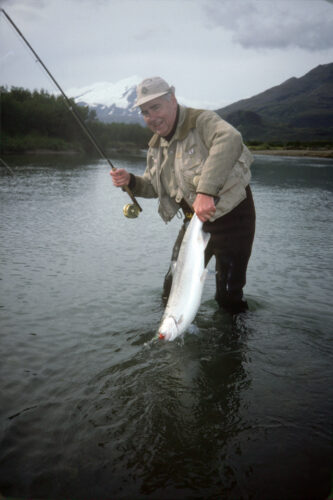
There have been six Alaska trips since then, all to the Alaska Peninsula but none back to Fairbanks. The fish that has pulled me back to Alaska has always been the coho, the great silver salmon. Not the Chinook; they are huge beyond belief, but they arrived before the coho run started and held deeper in the rivers than the silvers. I found out that the best times for silvers, with rainbow trout and chum salmon, were from mid-August to early September.
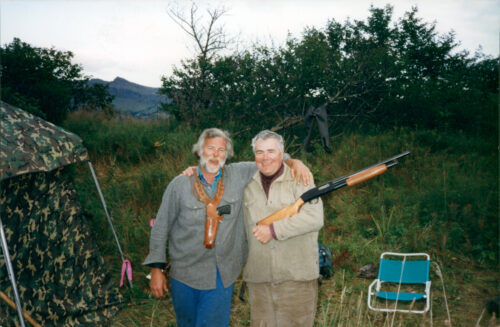
TODAY, I LOVE SPENDING time looking at Fairbanks on Google Earth. Zoom in and there by the Chena River sits downtown Fairbanks. Cushman Street takes you past the building that was Fairbanks High and to Mapes Road to another military base now. But in my day Mapes ended at the gates of Ladd Air Force Base, where shuttle buses ran from the gates to the heart of the base, which was mostly underground. But you can still see where the runways ended right at Mapes Road. Sometimes you had to wait as F-86 Sabres swooped over the road, reminding you that we were at war, which did not end until 1953 when the conflict ended in Korea.
No, I never went back to Fairbanks, but I think about it a lot. On many nights now I close my eyes and the Air Force shuttle bus has left me standing beside Mapes Road. There are now open fields where a few quarters have been built. The snow crunches underfoot in January and February as I walk toward home, after an evening reporting on a basketball game for Jessen’s Weekly.
The northern lights are sweeping across the sky in waves, flowing in shapes that change colors as they move, from light green to darker shades. The sight is so compelling that it almost makes me afraid in its vastness and my feeling of loneliness, a mere speck amid so much grandeur.
That’s one of many, many reasons Alaska will never cease being a part of me. ASJ
Editor’s note: Order The World’s Greatest Fishing Stories at amazon.com/Worlds-Greatest-Fishing-Stories/ dp/1493088955.
SIDEBAR: Salmon Fishing On The Other Side Of The World
An excerpt by acclaimed outdoors writer Ernest Schwiebert from the Lamar Underwood-edited book, The World’s Greatest Fishing Stories:
The occasions when I had the opportunity to fish with my friend the late Ernie Schwiebert were far fewer than I would have liked, but they qualified as memorable experiences in every way. In Iceland, and on the storied Brodheads in Pennsylvania, I watched Ernie dissect salmon and trout water with the skilled cuts of a master surgeon. Ernie didn’t merely fish a stream: he stripped it bare, from the outer layers of skin to the marrow of the bones. No secrets could remain hidden long from his detailed analysis. It’s all very simple, really. Ernest Schwiebert found where the fish were, figured out why they were there and what they were doing, then proceeded to catch them. Or maybe I’ve got it backward. Perhaps he figured out what they were doing first, then found them. In any case, as likely as not, when you looked his way on the stream, you’d see the bowed, straining hoop of his rod.
“The Night of the Gytefisk” is from Ernie’s collection of stories A River for Christmas and Other Stories, published by the Stephen Greene Press Inc., of Viking Penguin Inc., in 1988. In this tale we’ll be journeying as close as most of us will ever get to Norway’s legendary Alta, home of record-breaking Atlantic salmon and the proving ground where reel drags, backing and fish-playing skills are tested to their limits. -LU
The river is the finest salmon fishery in the world. It is the storied Alta.
The Alta has been fished since the Duke of Roxburgh first sailed his yacht into its fjord in 1862 and discovered that the river teemed with big salmon. Roxburgh shared its sport for many years with the Duke of Westminster, who was famous for both salmon fishing and his liaisons with the French couturier, Coco Chanel. Roxburgh built the Sandia and Sautso camps in Victorian times, but in earlier seasons his parties fished from steam yachts moored off Bossekop. The beats were fished in rotation, splitting the rods into four groups. Each party was patiently ferried and poled to Sautso, where they camped and floated back to their luxurious quarters on the yachts. When the first party reached the middle beats at Sandia, the second was ferried past them to the upper river, and the third group soon followed. These parties poled and portaged along the river throughout July, fishing back from Sautso to the comfort and cuisine of the yachts, stopping at rough camps along the river.
It was a time of great wealth and privilege.
Charles Ritz has written about such sport in A Fly Fisher’s Life, and I have heard him sing its praises from the little bar just off the Rue Cambon, in his famous hotel at the Place Vendôme in Paris. It is simply unique! Ritz insisted excitedly with Gallic gestures and staccato speech.
It’s the Valhalla of salmon fishing – and once you have tasted it, nothing in your life is the same!
My first night at Sandia was something of an accident. I had been fishing the Reisa, and it had been so poor that we decided to leave three days early. When I arrived at Bossekop, there was a message telling me to come immediately to Sandia. Its party was a rod short, since one of the fishermen had become ill, and I had been asked to fish out his last day.
It was not so much a day of fishing I had been offered, since the salmon I might catch belonged to the river owners and were worth considerable money. The night’s fishing proved wonderful. Although I felt a little like a Danish trawler, I took 10 salmon averaging 23 pounds with a 10-foot Garrison that had belonged to the late Paul Hyde Bonner.
The boatmen arrived after lunch to ferry me farther up the river to Sautso, and we motored upstream through famous pools like Ronga and Mostajokka to the foot of the boulder-strewn portage at Steinfossnakken. We changed boats there. The ghillies carried my duffle and baggage between them on a heavy pole, past the wild torrent of the Gabofoss Rapids to the lip of the Gabofoss Waterfall itself. I carried the tackle and a small duffle of fly-tying gear. Gabofoss thundered past in its chill explosions of spray, its roar blotting out all thought and other sounds, filling the morning with its icy breath. The rocky trail was traversed slowly, and finally we reached the Sautso stillwater.
We spooked a great fish lying off the upperboatmooring,anditswakedisturbed the rocky shallows. The old boatman stood looking at the towering cliffs, squinting into a surprising midday sun.
“Sautso is a paradise,” he said. –Ernest Schwiebert

Alaska Salmon 2011: Not Too Shabby

Prime Time For Face Time At Sportsmen’s Shows

EPA: Potential ‘Adverse Impacts’ On Bristol Bay Salmon Fishery With Pebble Mine; Comment Period On Draft Study Open Into July
About Author
